Child-Friendly Stump Removal & Grinding Cleanup
Parents see a backyard differently. Where a contractor sees a stump and a pile of chips, a parent sees tripping hazards, splinters, and tiny fingers curious about everything. Good stump removal and grinding cleanup in a family yard is not just about making the space level. It is about giving kids a safe place to run without hidden dangers, and doing it in a way that respects nap schedules, sensitive ears, and the daily rhythms of home life.
I have ground hundreds of stumps and cleaned up just as many sites. The difference between a job that looks finished and one that truly is family ready comes down to planning, containment, and follow-through. The choices you make before the grinder even starts up affect how much debris spreads, how much soil settles later, and how quickly children can get back to using the yard.
Why stumps linger and why families want them gone
Stumps linger because they are stubborn. Even small stumps can have flare roots that occupy several feet of soil. Remove the trunk, and you still have a hardwood post in the ground that can sprout, host insects, and snag toes. In family yards, that creates a cluster of risks. Kids sprint without watching their feet, and stumps or lateral roots sit just proud of grade. A tumble is almost guaranteed during tag or soccer.
There are aesthetic reasons too. A clean, uninterrupted lawn is easier to mow and easier to supervise, which matters when you are the adult on deck and you want clear sightlines. If you are weighing Tree Removal Services for a large tree near play equipment, ask what the stump plan is. A tree that looked imposing while standing becomes a hidden obstacle course once you cut it down, and you will live with that stump for years if it is not addressed.
A word on chemical stump removers
Families sometimes ask about chemical stump removers because they seem quiet and inexpensive. In practice, they are slow, often months to years, and they leave a decaying cavity that can cave in. The formulations typically contain nitrates. Even when used as directed, you are keeping reactive material in a yard where children dig, dogs chew, and rain migrates. I do not recommend chemical removers for family yards. If the goal is a safe play surface within days, mechanical Stump Removal & Grinding is the reliable route.
Grinding depth, debris volume, and what that means for kids
Stump grinders come in several sizes. For most family yards, a tracked grinder that can reach 12 to 16 inches below grade is ideal. That depth gives room for future turf roots and prevents sprouting. Go shallower and you risk mower blades hitting hidden wood later. Go deeper than 16 inches and you start to disturb irrigation lines and create a larger sink as chips decay.
The debris volume surprises people. A stump 24 inches across may produce enough chips to fill a small pickup bed. Those chips look soft, but they are full of splinters and tanning compounds. Kids get them in socks and then into the house. A child-friendly cleanup plan assumes you will export most chips, use only a controlled amount as mulch, and import screened topsoil for the final surface. That trade-off, hauling out the chips and bringing in soil, costs more on the day of the job but saves rework, sinkholes, and scraped knees later.
The family-first site assessment
Start with a Certified Arborist Consultation if you have any concerns about the tree’s condition, roots near utilities, or the suitability of the space for children after removal. During that visit, flag hazards that matter to families. Playground borders, trampoline anchors, sprinkler heads, pet runs, and raised garden beds all affect how the stump is approached and where the grinder can safely operate.
If the original tree stood near a fence or deck post, consider whether roots have become structural. I have seen old concrete footings hugged by roots so tightly that aggressive grinding could undermine the post. In those cases, careful hand excavation and staged grinding preserve the structure and still remove the trip risk at the surface. A Dangerous Tree Assessment and Removal often includes deciding whether to lift segments of decking temporarily, or whether Tree Cable and Bracing is a better interim solution for a leaning trunk while you plan safe removal outside of the school week or during a quieter season.
Scheduling around family life
Noise, vibration, and dust are real. Stump grinders can read at 100 decibels at the machine. Plan the work when naps are finished and when neighboring kids are at school, or give neighbors a heads-up if their toddlers nap midafternoon. I have had good luck with early starts, then taking a break during the lunch and nap window, and returning for final cleanup in the late afternoon. If anyone in the household has sensory sensitivities, ask the crew to idle the machine while you help the child get comfortable inside. Close windows on the side facing the grinder to cut dust and noise.
Weather matters too. Grinding during a dry spell controls rutting, but extremely dry wood throws more dust. A light pre-wet of the stump face can keep particulate down. After heavy rain, even tracked grinders can mark a lawn, and pushing chips across wet turf creates a mess that clings to everything. When families can wait two or three days for the ground to drain, the cleanup is faster and cleaner.
The kid-proof containment plan
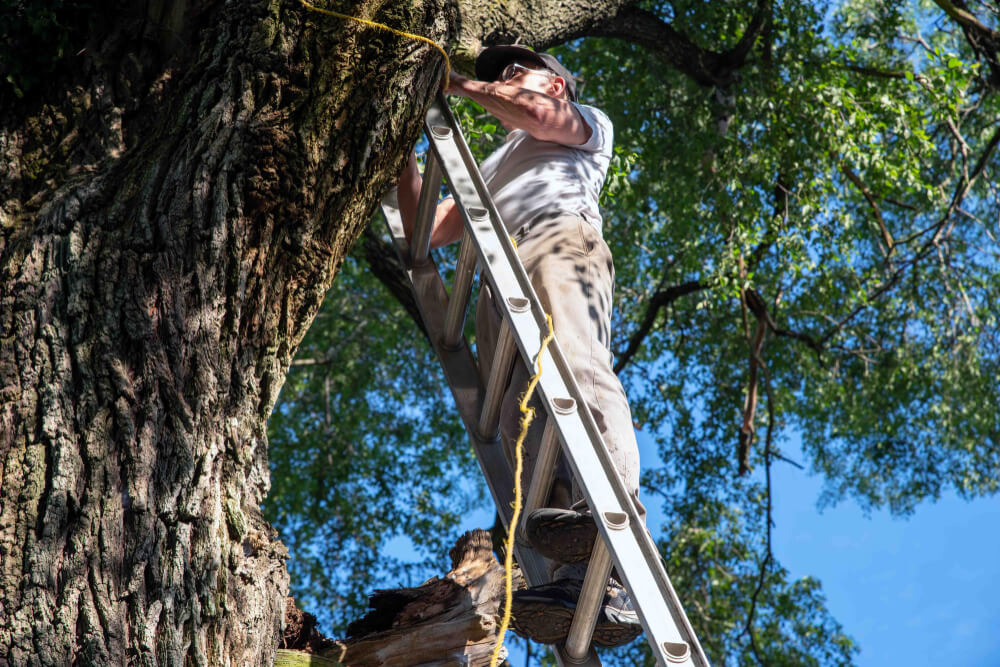
Containment is not a line item on an invoice, but it should be. Good operators treat grinding like a controlled excavation. We guard gates so pets cannot bolt, and we create soft barriers that stop chips without introducing new hazards. For small stumps, portable chip screens work. For larger pieces, heavy moving blankets hung between T-posts absorb impact without bouncing chips over the top. I avoid tarps near kids, because they billow and can become a tripping hazard themselves if the wind comes up.
I learned this the hard way at a job where a buried stone hidden in the stump threw a chip farther than expected. It missed a window by a few inches, but it reminded me how often family yards include low windows and sliding glass doors. If your grinder sits within 25 feet of glass, ask for plywood protection. The best day is the one where nothing exciting happens.
Pre-appointment checklist for families
- Mark every sprinkler head, valve box, and shallow irrigation line with flags, and provide a simple sketch if you have one.
- Put away yard toys, soccer goals, and ride-ons. The fewer temptations on the lawn, the easier it is to keep kids distant.
- Confirm pet logistics. A quiet room indoors with a sound machine helps many dogs ride out the noise.
- Share your schedule. Tell the crew about nap times, school pickup windows, and any deliveries expected that day.
- Identify power and utility lines. Overhead service near the drop zone or shallow electrical conduits to sheds should be called out.
How deep is deep enough, and when to chase roots
For most yards, 12 to 16 inches below grade is right. If you plan to install a swing set, sandbox, or a patio over the area, tell the arborist so they can grind wider and deeper around the stump flare. Lateral roots that sit two to four inches under the grass can stretch out ten feet or more. I do not chase every root to the property line for families, because it chews up lawn, creates long trenches, and adds little safety value. Instead, we clear the top six inches of soil out to the dripline, remove or chip any root proud of grade, and then relay topsoil. That keeps kid feet from catching while preserving stability in nearby soil.
If the tree sent roots under a playset pad, grinding in place risks throwing chips into the rubber tiles. In that edge case, it is often safer to lift the pad sections, grind, and reinstall. It takes an extra hour but prevents sharp chips from getting embedded where children crawl.
The cleanup that actually makes a yard usable
Grinding creates a bowl of chips and soil. If you walk away after raking, the bowl will settle over months as wood decays, and your level lawn becomes a swale that holds water. Children find those soft zones, jump on them, and the depression deepens. A child-friendly cleanup swaps the bowl for a compacted base.
Here is the sequence I use on family jobs where the goal is fast return to play with minimal future settling.
- Extract the bulk chips with a flat shovel into a bin rather than spreading them. Reserve a small, clean portion for mulching trees away from play areas.
- Scarify the sides of the grind hole to break glaze, then import screened topsoil in lifts, lightly compacting with a hand tamper every three to four inches.
- Restore grade slightly high, about half an inch, to allow for minor settlement. Rake smooth with a flexible tine rake that leaves no sharp stone.
- Seed and cover with a biodegradable straw blanket, or lay sod if you want the space playable within a week. Keep sod edges tight to reduce toe catches.
- Wash and sweep hard surfaces, then do a glove sweep in the grass within 15 to 20 feet to pick up any stray sharp chips.
Families sometimes want to keep all chips as mulch. In a garden bed far from play, that is fine. In a lawn or under a swing, thick chip layers hide hazards, attract carpenter ants, and starve turf of nitrogen as they decompose. Keep mulch to two inches, pull it back three inches from trunks, and avoid fresh chips under climbing structures.
Dust, silica, and small lungs
Stump grinding is mostly wood fiber, but dry soils in many regions contain crystalline silica. I do not raise alarm, but I take dust seriously. A light mist from a garden hose aimed at the grinder’s cutting zone can cut airborne dust dramatically without creating mud. Operators should wear eye protection and hearing protection, and if your child is curious and wants to watch from a window, keep that window closed while the machine runs. Afterward, a quick wipe of sills and a HEPA vacuum pass inside the nearest room keeps fine dust out of noses.
Edges, borders, and keeping kids on their feet
Most kid injuries around landscape work happen at edges. The lawn meeting a bed, a grind area meeting old turf, or a border made of loose pavers become places for unexpected ankle rolls. I like to install a temporary visual cue for children for the first week after grinding. Bright landscape flags on the new turf or a rope barrier around the restored area remind running kids that the ground may be a touch softer.
Where grinding occurs adjacent to rubber play tiles or poured-in-place surfaces, inspect after the work for lifted corners or gaps. Kids drag toes and catch them on these lips. A few minutes with a mallet and adhesive can re-seat edges before the next chase game starts.
When Emergency Tree Services and families intersect
Storms do not wait for your calendar. If a limb failure forces Emergency Tree Services and sudden stump work, the safety calculus tightens. Power is often out, yards are wet, and kids are home. I keep a small kit ready for these calls: reflective cones to close off the work zone, portable lights safe for damp conditions, and a cheap box of ear defenders sized for children. Give the crew space, and if you only remember one thing, keep kids out of the drop zone even after the machine shuts off. Stump holes and tracked ruts look like playground features to a child. They are not.
If the tree that failed was one of a matched pair near a play area, plan a Certified Arborist Consultation after the emergency pass. The remaining tree may now be more exposed to wind. In that case, Tree Cable and Bracing or Tree Pruning & Crown Shaping can balance the canopy and reduce future surprises without removing the shade you value.
Soil health after chips and how to get grass back quickly
Wood chips tie up nitrogen as they decompose. If you blend too many chips into the topsoil at the grind site, grass struggles. The remedy is simple. Remove chips aggressively, add fresh topsoil, and feed the restored area with a starter fertilizer that includes nitrogen, phosphorus, and potassium in a balanced ratio. On family lawns, I prefer slow release nitrogen to avoid a rapid flush that demands more mowing. Water lightly twice a day for the first week for seed, or daily for sod until roots tack. Keep kids and pets off the area long enough for roots to anchor. In good weather, sod can handle foot traffic within 7 to 10 days.
If you are trying to grow grass in partial shade created by remaining trees, choose a shade tolerant blend. A Certified Arborist can pair that with selective Tree Pruning & Crown Shaping to raise light levels by thinning interior branches, not topping. More light on the new turf helps it compete, which keeps bare soil to a minimum and knees cleaner.
Ants, bees, and critters in the grind zone
Stumps sometimes host ants or bees. Carpenter ants love moist wood, and ground nesting bees use loose soil in spring. Before grinding, I probe with a bar and listen. If we find activity, we adjust. For ants, a non-repellent treatment a few days ahead evicts them without turning your yard into a chemical zone. For bees, timing helps. Many ground nesters are temporary. Rescheduling by a week or two often solves the conflict. When families keep beehives, we coordinate flight paths and cover hives during noisy work. Pets deserve the same attention. If your dog has a habit of chewing sticks, keep them inside during cleanup. Fresh grindings can irritate mouths and gut.
Utility locates and the hidden stuff under lawns
Grinding is shallow compared to full Tree Removal Services with root excavation, but it can still intersect shallow utilities. Call for locates, and remember that private lines to a detached garage, a pool pump, or landscape lighting will not be marked by public services. I keep a non-conductive probe handy and confirm depth before I drop the wheel deeper than eight inches near suspected routes. Families with irrigation systems benefit from a quick pressure test after the job. A cracked line two inches down will not show itself until the first long cycle creates a soft, muddy patch the kids will find before you do.
When full stump removal beats grinding
Grinding leaves roots in place to decay naturally. Most of the time, that is fine. When you plan a footing, a sport court, or a deep sandbox, you sometimes want the old root plate out. Mechanical extraction with a mini excavator is louder and rougher on the lawn, but it gives you a void you can refill uniformly. The family angle here is predictability. If you intend to build over the spot and want zero future settlement, extraction can be worth the disruption. Budget for more topsoil, temporary fencing to keep kids out of the excavation, and at least a day of drying time before compaction and restoration.
FireSmart Tree Services in family neighborhoods
In fire prone regions, FireSmart Tree Services overlap with family safety. Removing stumps near structures reduces smoldering fuel beds. Chips piled against fences or home siding create ember traps. If a stump must be ground near the house, export chips or spread them thin and moist far from the structure. Replace with crushed rock in the first five feet around the home. It is easier to explain to a child that the rock ring is a no toy zone than to rebuild a charred fence. A FireSmart plan also includes live vegetation spacing. After you remove a tree, resist the urge to pack the gap with shrubs. Keep clear zones where kids play and embers have nothing to catch.
Communication that keeps kids safe and involved
Children watch everything. The best days on family sites are the ones where we harness https://jsbin.com/tuciloviba that curiosity without exposing kids to risk. A minute spent at the start explaining that the bright cones mean stop, the machine is off limits, and the pile is not for jumping keeps everyone calmer. I sometimes stage one or two “show and tell” chips that kids can hold while the real work happens behind screens. Parents appreciate being part of the loop. Text updates when the grinder is about to start or when the quiet cleanup phase begins help caregivers plan snacks, homework, and pet breaks.
Aftercare and the first week
The first week sets expectations. Soil settles a hair. Seed germinates or sod takes. People cut corners across the new patch because it looks finished. Families do well with a short, written aftercare note on the counter or by text that says water schedule, foot traffic limits, and who to call if a depression forms. If I expect more than a half inch of settlement due to unseen root voids, I schedule a quick top-up visit in two to four weeks. It keeps the play surface smooth and maintains trust.
Keep a magnet sweep wand handy if any metal fasteners were used near decking during tree work. One pass takes minutes and might save a bike tire or a bare foot. Before the first mow over new sod, lift the deck to the highest setting and walk the area. Your eyes will catch any ridges faster than the mower will.
How the broader tree plan supports a kid-safe yard
Stump work often sits inside a bigger plan. A Certified Arborist Consultation looks at the whole canopy you live under. Maybe you removed a storm-damaged maple near the sandbox. Pruning the remaining oaks in the same visit improves light and reduces deadwood. Thoughtful Tree Pruning & Crown Shaping preserves climbing branches that are safe and removes the ones too brittle for little hands. If a tree the children love to climb has a union we do not trust, Tree Cable and Bracing provides backup while we watch how it behaves over seasons. Dangerous Tree Assessment and Removal focuses on those outliers that lean over the sidewalk or have advanced decay at the base. When removal is the call, pairing it with careful stump grinding and family focused cleanup brings the yard back to full use quickly.
If you have a row of conifers or a natural play area where you want to maintain privacy, ask for directional pruning to lift the canopy without creating ladder branches that make unsupervised climbing too easy. The goal in family yards is managed risk, not zero risk. You want places to explore, but you also want to avoid predictable injuries from loose bark, dead stubs, and hidden root ridges.
Costs, timelines, and what families should expect
Prices vary with stump size, access, species, and how much cleanup you choose. For an average suburban stump 18 to 24 inches across with clear access, budget for an hour of machine time and another hour of cleanup and soil import. Add time and cost for chip hauling and sod installation. Tight gates, steep slopes, or hand work around utilities extend the day. A full kid friendly scope that includes chip export and sod often lands in the range of a few hundred to a bit over a thousand dollars per stump, depending on your market. Ask for a line item that shows chip handling and soil import distinctly. It helps you compare proposals and decide where you want to invest.
Timelines are shorter than people expect. Many family jobs start at 9 a.m. And have a restored surface by late afternoon. If weather cooperates and sod is used, kids can be back on the area within a week. Seed stretches that to several weeks, which is fine in off seasons but tough mid summer when the yard is the main recreation space.
Red flags when hiring for a family yard
You do not need the biggest grinder in town. You do need a crew that takes containment and cleanup seriously. Be wary of contractors who suggest leaving all chips in the hole unless you plan to live with a settling spot. If you hear that “kids will be fine, it is just wood,” keep looking. A good operator will ask about utilities, pets, and schedules. They will offer to protect windows and explain noise and dust plans. For many families, the right partner is a full service team that can handle Tree Removal Services, Stump Removal & Grinding, and follow up pruning in one coordinated visit. Fewer visits means fewer disruptions to routines.
A yard that invites play
The last sweep of a rake is not the end. The measure of success is a child running across the yard without looking down, a parent glancing out the window and seeing a smooth patch that blends in, and a week later, no surprise holes or sharp chips showing up in the laundry. Child friendly stump removal and grinding cleanup is careful work, but it is straightforward when you respect the way families use space. Thoughtful depth, firm backfill, smart debris management, and clear communication turn a necessary chore into a quiet success you barely remember by the time the grass fills in.
When you start with a plan and a team that knows the nuances, you get more than a stump gone. You get a safer playfield, cleaner floors, and one less thing to navigate in a busy household. That is the real finish line.
Ace Tree Services Ltd.
Name: Ace Tree Services Ltd.Address: 4656 Wallace Hill Road, Kelowna, BC
Postal code: V1W 4C2
Phone: 250-212-9593
Website: https://acetree.ca/
Hours:
Monday: 7:00 AM - 5:00 PM
Tuesday: 7:00 AM - 5:00 PM
Wednesday: 7:00 AM - 5:00 PM
Thursday: 7:00 AM - 5:00 PM
Friday: 7:00 AM - 5:00 PM
Saturday: 7:00 AM - 5:00 PM
Sunday: Closed
Open-location code (plus code): RHF8+8G Kelowna, British Columbia, Canada
Map/listing URL: https://www.google.com/maps/place/Ace+Tree+Services+Ltd./@49.8232606,-119.4337283,659m/data=!3m2!1e3!4b1!4m6!3m5!1s0x537d8b1d074815c5:0x450b88afa7a41435!8m2!3d49.8232606!4d-119.4337283!16s%2Fg%2F11ydkpnh22
Embed iframe:
"@context": "https://schema.org", "@type": "HomeAndConstructionBusiness", "name": "Ace Tree Services Ltd.", "url": "https://acetree.ca/", "telephone": "250-212-9593", "address": "@type": "PostalAddress", "streetAddress": "4656 Wallace Hill Road", "addressLocality": "Kelowna", "addressRegion": "BC", "addressCountry": "CA" , "openingHoursSpecification": [ "@type": "OpeningHoursSpecification", "dayOfWeek": "https://schema.org/Monday", "opens": "07:00", "closes": "17:00" , "@type": "OpeningHoursSpecification", "dayOfWeek": "https://schema.org/Tuesday", "opens": "07:00", "closes": "17:00" , "@type": "OpeningHoursSpecification", "dayOfWeek": "https://schema.org/Wednesday", "opens": "07:00", "closes": "17:00" , "@type": "OpeningHoursSpecification", "dayOfWeek": "https://schema.org/Thursday", "opens": "07:00", "closes": "17:00" , "@type": "OpeningHoursSpecification", "dayOfWeek": "https://schema.org/Friday", "opens": "07:00", "closes": "17:00" ], "geo": "@type": "GeoCoordinates", "latitude": 49.8232606, "longitude": -119.4337283 , "hasMap": "https://www.google.com/maps/place/Ace+Tree+Services+Ltd./@49.8232606,-119.4337283,659m/data=!3m2!1e3!4b1!4m6!3m5!1s0x537d8b1d074815c5:0x450b88afa7a41435!8m2!3d49.8232606!4d-119.4337283!16s%2Fg%2F11ydkpnh22"
Ace Tree Services Ltd. provides professional tree removal, pruning, stump grinding, emergency response, and arborist consultations for properties in Kelowna and across the Okanagan Valley.
The company works with homes, commercial properties, and municipal settings where tree work needs to be planned carefully around buildings, fences, driveways, landscaping, and other site constraints.
Based in Kelowna, the team is positioned to help nearby neighbourhoods and surrounding Okanagan communities with routine tree care and time-sensitive storm cleanup.
Customers looking for careful tree work often want a crew with certified arborist training, insurance, and a methodical approach to higher-risk removals.
Services also include dangerous tree assessment, cabling and bracing, and wildfire risk reduction tree work for properties that need longer-term planning.
To request a quote or discuss tree care options, call 250-212-9593 or visit https://acetree.ca/.
A public map listing is available to help customers confirm the business location and get directions before a site visit or estimate.
For Kelowna property owners who need pruning, removals, or emergency tree help, a local tree service can make it easier to schedule site-specific recommendations and cleanup.
Popular Questions About Ace Tree Services Ltd.
What services does Ace Tree Services Ltd. provide?Ace Tree Services Ltd. lists tree removal, stump removal and grinding, tree pruning and crown shaping, emergency tree service, arborist consultation, dangerous tree assessment and removal, cabling and bracing, and wildfire risk reduction tree work.
Who does Ace Tree Services Ltd. serve?
The company describes its work as serving homes, businesses, and municipalities in Kelowna and across the Okanagan Valley.
Is emergency tree help available?
Yes. Emergency service is listed for downed or uprooted trees, dangerous tree assessment, stabilization work, and branch cleanup. If a tree is near power lines, the safest first step is to stay clear and contact the utility provider before any tree work begins.
Do I always need a permit to remove a tree?
Not always. Permit requirements can depend on where the tree is located and whether it is near a creek, lake, steep slope, or another protected area. It is best to check local rules for the specific property before removal work starts.
How deep does stump grinding usually go?
Standard stump grinding is typically described as going about 6 to 12 inches below ground level, which is often enough for grass or surface landscaping. Deeper grinding may be possible when site plans call for it.
How much of a tree can be safely removed at one time?
That depends on the species, age, health, and structure of the tree. In practice, good pruning is usually about removing the right limbs for health, clearance, and structure rather than chasing a fixed percentage.
What are common signs that a tree may be dangerous?
Large dead limbs, visible cracks, a new lean, root damage, canopy dieback, or storm-related damage can all be warning signs. Trees near structures deserve extra attention when any of those issues appear.
What is cabling and bracing in tree care?
Cabling and bracing are support systems used to reduce the risk of failure in trees with structural weaknesses that may still be worth preserving. They are generally used to add support, not to replace good assessment and ongoing maintenance.
How do I contact Ace Tree Services Ltd.?
Call 250-212-9593.Website: https://acetree.ca/.
Landmarks Near Kelowna, BC
Downtown KelownaThe downtown core is a practical reference point for lakefront neighbourhoods, mixed-use streets, and central residential properties. If your property is near downtown, tree pruning, removals, and cleanup can be planned around tighter access and nearby structures.
Knox Mountain Park
This well-known park north of downtown is a recognizable landmark for nearby homes and hillside properties. If you are close to this area, ask about tree assessment, trimming, or removal work suited to sloped sites.
Mission Creek Greenway
The greenway runs through several parts of Kelowna and is a useful landmark for nearby residential areas. If your property borders or sits near this corridor, site-specific tree planning is especially important.
Pandosy Village
Pandosy is one of Kelowna’s most recognizable neighbourhoods and a common reference point for south-central properties. If you are nearby, request help for pruning, removals, or storm cleanup around homes and small commercial sites.
Rutland
Rutland is a major east Kelowna neighbourhood with a mix of residential and local commercial properties. If you are located in or near Rutland, tree work can be scheduled for both routine maintenance and urgent situations.
Landmark District
This central business-focused area is a practical landmark for offices, service properties, and nearby residential streets. If your site is near the district, ask about careful tree work around parking, access lanes, and built-up lots.
Kelowna’s North End
The North End sits on the edge of downtown and is a useful reference for nearby homes, industrial sites, and commercial properties. If you are in this part of the city, request tree care based on the layout and constraints of the lot.
Airport District
The Airport District is a recognizable north Kelowna reference point for surrounding properties and access routes. If you are in this area, ask about tree services for residential acreage, commercial sites, or roadside cleanup needs.
Glenmore & Dilworth
These established Kelowna neighbourhoods are useful landmarks for central and north-central service calls. If your property is nearby, pruning and removal work can be tailored to mature trees and established landscapes.
Highway 97 Corridor
Highway 97 is one of the city’s main travel routes and a common way to describe location within Kelowna. If your home or property is just off the corridor, a clear landmark reference can help speed up quote scheduling and site planning.