Commercial Tree Removal Services for Business Properties
Trees quietly shape how a commercial property looks, functions, and even how it performs financially. Shade can lower cooling costs. A neat canopy can raise perceived value before a lease tour. On the other hand, an overextended limb over a loading dock or a root buckling a walkway can create direct liability. Good management does not just wait for a storm. It tracks health, risk, and long term growth, and it brings in the right expertise at the right moment.
This is where a comprehensive approach to Tree Removal Services and adjacent disciplines earns its keep. Pruning and crown shaping, Dangerous Tree Assessment and Removal, Tree Cable and Bracing, Stump Removal & Grinding, Emergency Tree Services, Certified Arborist Consultation, and FireSmart Tree Services all play specific roles. The trick is to deploy them with judgment, based on site conditions, tenant operations, and local regulation.
What commercial property managers really need from tree work
Property managers do not buy tree work for the sake of tree work. They buy lower risk, higher curb appeal, and clear compliance. I have managed sites with restaurant patios tucked under old maples, truck courts with tight turning radii, and suburban campuses with fire setbacks along the rear fence line. Each setting demands a different mix of services.
A portfolio with high public foot traffic lives under a stricter risk threshold. That may tilt more budget toward certified inspections, crown cleaning, and proactive removals of weak species before storm season. A back-of-house logistics yard cares less about aesthetics and more about clearance, visibility for cameras, and keeping debris out of drains. In the wildland urban interface, the number one priority may be vertical and horizontal fuel breaks that pass a FireSmart audit. Wise planning keeps all of those goals visible at once, then sequences work so a crane day or a chipper mobilization serves multiple purposes.
Why start with a Certified Arborist Consultation
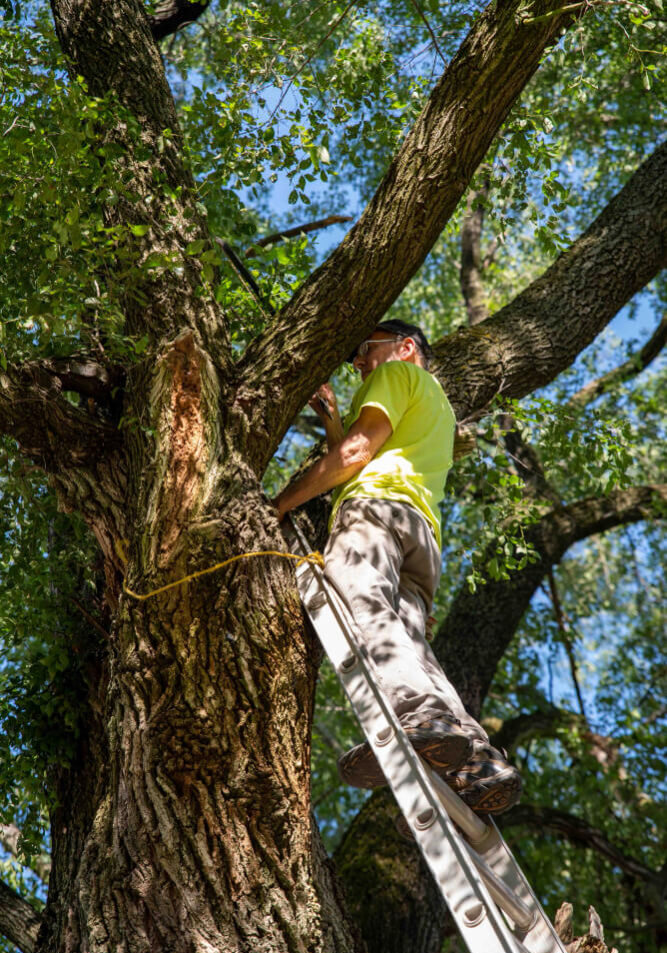
A Certified Arborist brings diagnostic skill you cannot fake. In a walkthrough, a good arborist does not just point at deadwood. They read the union of codominant stems, note the fruiting bodies that hint at internal decay, and evaluate root plate stability in soils that hold water. That matters, because many hazards hide in plain sight and do not show in a quick glance.
On a multi building campus I managed, we budgeted for a semiannual Certified Arborist Consultation that covered about 400 trees. The arborist tagged 17 for close watch and 6 for immediate action. One of those was a handsome, full crowned ash along the main walkway. It looked fine to the untrained eye. A mallet tap and a look at exit holes told a different story. We ordered a resistograph test, confirmed decay, and scheduled removal for a Sunday morning. Six months later a windstorm took down several untreated ashes across town. That single consultation likely prevented an insurance claim and days of disruption.
Consultations also produce prioritized work lists that match budgets. Rather than a scattered stream of small jobs, you can plan a cycle: prune by area, cable the handful of valuable heritage trees, remove truly dangerous trees, grind the stumps before spring growth, and replant where canopy gaps matter.
The case for Dangerous Tree Assessment and Removal
Removal is a last resort, but you reach it more often on commercial sites than in a home garden. Liability threshold is lower, and tolerances for branch drop over parking spaces are slim. A formal Dangerous Tree Assessment weighs three things: the likelihood of failure, the likelihood of impact, and the consequences. Easy to say, hard to quantify without training.
For example, a leaning pine that alarms a tenant might not be at risk if the lean is long standing and the root plate is intact. Conversely, a large limb over a walkway that appears sound could fail if included bark or old pruning wounds hide rot. Hazard ratings guide the next step. Where pruning and bracing can mitigate, use them. Where they cannot, remove cleanly, during off peak hours, with the right equipment for confined spaces. The tone to strike is practical: act decisively on high risk, monitor the borderline cases, and document both paths in your maintenance records.
Tree Pruning & Crown Shaping that respects operations
Pruning on a commercial property has three priorities in practice. First, reduce risk by removing dead, diseased, or structurally unsound limbs. Second, establish clearances for trucks, signage, and lighting. Third, maintain a consistent, cared for look that supports the brand.
Crown shaping does not mean rounding trees into lollipops. It means thinning crowded branches to allow wind to pass, lifting canopies over drive lanes, and making selective reduction cuts to keep a tree proportionate to its site. A well planned cycle usually touches each mature tree every two to four years, with touch ups near storefronts and walkways in between if needed. The work should be done by climbers or bucket crews who understand proper cut placement and species response. A bad cut on a fast growing species like silver maple can create a bigger problem in two seasons than it solves.
Schedule pruning work around peak tenant hours. On restaurant patios, we often staged lifts before 10 a.m. And after 2 p.m. On office campuses, we bundled zones so a parking lot was done in one day, with clear notices out a week ahead. The crew manager should carry a copy of the scope with tree tags marked. That avoids onsite debates and change orders mid day.
Tree Cable and Bracing to preserve high value specimens
Some trees are worth saving even when they have structural issues. Historic oaks, prominent entrance feature trees, or legacy plantings can justify Tree Cable and Bracing. The technique uses static steel or dynamic synthetic systems to support weak unions or heavy laterals.
The key is to combine support with reduction pruning that lowers the load. Cables without pruning simply transfer forces elsewhere. A Certified Arborist should specify anchor points, cable type, and inspection intervals. Expect a first inspection at one year, then every two to three years. If the tree continues to decline, plan an exit. One property I advised had a pair of mature elms flanking the main lobby. We cabled the weaker elm, reduced the crown, and extended its life by at least seven years. We also preplanned removal options and a replanting scheme. When a storm finally created a new crack, the transition was controlled, with minimal disruption.
When Tree Removal Services make business sense
Removal is not a failure. It is a tool. If a tree sits too close to a building, drops messy fruit at an entry, or sends roots into sanitary lines, removal may be the lowest total cost answer. Timing, technique, and communication decide whether the job feels like a nuisance or a smooth maintenance step.
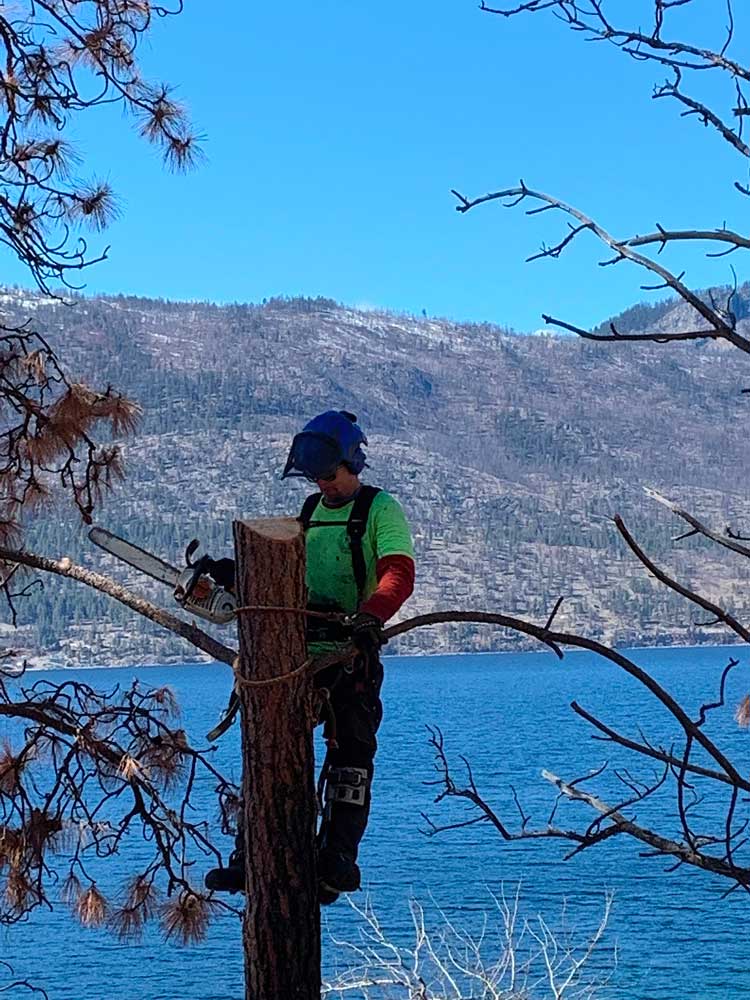
Urban removals come in several flavors. Straight felling is rare on finished properties. Most removals are sectional climbs with rigging to protect paving and plant beds, or crane assists for speed and safety. Alleyways, plazas, and rooftop courtyards demand compact equipment and a careful access plan. On a mixed use site, we once removed five poplars behind a loading dock using a 90 ton crane staged in the street for a single six hour window approved by the city. The crew pre rigged limbs at dawn, and we flew sections over the dock, cleared chips as we went, and reopened the street by early afternoon.
Do not wait for budget year end to decide on removals. Prices often climb in late spring when demand spikes. Winter removals can be cheaper, and with leaves off, access and rigging lines are simpler.
Stump Removal & Grinding and what comes after
Leaving a stump on a commercial site is more than an eyesore. It disrupts mowing, collects trash, and invites tripping claims. Stump Removal & Grinding should be part of the same work order as removal when possible, even if the grinder returns a day later.
Specify grind depth in writing. For lawn areas, 6 to 8 inches may suffice. For replanting in the same spot, you want 12 to 18 inches plus removal of major lateral roots. In hardscape zones, confirm utility locates and adjacent footing depths. The crew should haul grindings and backfill with clean soil if you plan to replant or reseed. If you will replace with pavers, compact in lifts to avoid settlement. On one retail center, we skipped proper backfill on two stumps to save time, then paid for it when a delivery cart wheel found the soft spot two months later. The do it right cost is always lower.
Emergency Tree Services without chaos
Storms, vehicle impacts, and sudden failures do not respect business hours. A true emergency service provider answers the phone, gives an arrival window, and shows up with the right gear. That means a bucket or crane partner on call, a traffic control kit, and crew members trained to work under power lines and around glass storefronts.
Set expectations in your service agreement. Define response times for life safety issues versus property only. Clarify after hours rates and who onsite can authorize work. A good vendor will triage remotely from photos to decide whether to bring a crane, how to stabilize a hanging limb, and whether to wait for utility clearance. Keep a laminated map of your property with hydrants, main shutoffs, and overhead line routes. During a wind event last fall, we handled three properties in one night by prioritizing blocked fire lanes first, then lift hazards over occupied entries, then cosmetic cleanups the next day. Tenants remember steady communication more than the debris itself.
FireSmart Tree Services for properties near wildland edges
The rise in extreme fire behavior has changed tree management on properties adjacent to open space. FireSmart Tree Services focus on creating defensible space and reducing ladder fuels. Translated into a commercial context, that means maintaining a lean, clean, and green zone near structures, breaking up contiguous crown canopies, and removing dead or resin heavy species that stand too close to walls and eaves.
The work blends pruning, targeted removals, and ground fuel management. Raise canopies so the lowest limbs sit clear of shrubs. Thin out small diameter trees that provide vertical fire ladders. Maintain a separation between crown edges, often 10 feet or more in higher risk zones. Clear needles from roof gutters and keep mulch beds moist or swap them for rock near entries. If your site includes a perimeter road, keep a maintenance pass for mowers and crews, and coordinate with neighboring landowners so your efforts are not undone over the fence. Fire inspectors appreciate documented plans, before and after photos, and species lists. These details smooth annual reviews and insurance renewals.
Permits, utilities, and the paperwork that saves you
Many cities require tree work permits, especially for removals, street trees, or protected species. Fines for ignoring them are real. Your arborist should know local code and handle submittals, but accountability rests with the property manager. Verify whether mitigation plantings are required. If a code mandates replacement caliper inches, build that into your capital plan.
Utility locates are non negotiable before stump grinding or deep excavation. Above ground, treat any overhead line near work as live until a utility confirms otherwise. Crews who often work in residential neighborhoods may underestimate the density of services on a commercial site. Walk routes before work to flag sprinkler valves, lighting conduit, and shallow communications lines.
How to scope and bid tree work so it runs cleanly
Ambiguous scopes invite change orders. Use measured diameters at breast height, species names, and specific actions: reduce by a stated percentage, remove deadwood over a stated size, lift canopy to a stated height over named areas. Call out protection for surfaces, gates, and plantings. Ask bidders to state equipment they plan to use, including bucket size and any crane tonnage. Require proof of insurance that matches your lease language, including worker’s compensation and commercial auto, and get certificates naming your entity as additionally insured.
Pricing varies by market and time of year, but clarity reduces variance. In one portfolio bid, we saw a 60 percent spread between low and high on the same scope. When we asked for a revised bid that itemized by tree and task, the spread closed to 18 percent. The outliers had assumed different equipment and disposal plans. Aligning the assumptions saved headaches later.
A short pre job checklist that keeps tenants happy
- Notify tenants with dates, times, and affected parking or entries.
- Reserve and sign off staging areas for chipper, log truck, and crane if used.
- Confirm permits, utility locates, and after hours contacts.
- Walk the site with the crew lead to review special risks and protection.
- Stage barricades, cones, and signage for pedestrian rerouting.
Safety and liability are daily disciplines
A competent vendor lives by daily tailgate talks, PPE compliance, lockout procedures around equipment, and documented inspections of ropes, saddles, and saws. From the property side, you control public interface. Keep people out of drop zones. Do not allow tenants to shift barricades. Agree on a stop work signal between your onsite rep and the crew lead. If the crew finds an unplanned hazard, such as carpenter ants indicating internal decay in a nearby tree, pause and reassess. A modest delay beats a preventable injury.
Make documentation useful, not theatrical. Photos before and after, receipts for disposal, and any recommendations for follow up work should go into your CMMS with tree IDs if you track them. When you change staff or sell a property, this record proves care and can support disclosure.
Aftercare, replanting, and keeping canopy value
Removing a tree often creates a visual and environmental gap. On retail street fronts, you feel it immediately. Consider replanting plans as part of the same project. Species choice should fit the site: root behavior near paving, mature size clear of signage and windows, and tolerance for reflected heat near concrete and glass. On campuses, stagger ages and species to avoid uniform senescence and pest susceptibility.
Watering and establishment matter more than selection. A two inch caliper tree may need 15 to 20 gallons per week in the first growing season, adjusted for rainfall. Gator bags or bubblers simplify this on busy properties. Stake only if wind exposure demands it, and remove stakes within a year. Mulch lightly, keeping it off the trunk flare. Build these simple steps into the contract so the plant does not fail silently between maintenance visits.
Sustainability and wood waste options
Chipping and hauling to a green waste facility is standard, but there are smarter uses if you have space and interest. Some species can be milled into benches or accent lumber for tenant areas. Clean chips can top trails or planting beds, though be cautious with fresh chips around high visibility annuals. On a light industrial site with room to stage, we kept a dedicated chip pile for erosion control. The supplier discounted haul off since half the volume stayed onsite.
Ask your vendor about invasive pests and disposal rules. In areas with quarantines, you may need to move logs to approved sites within specific time frames. These details keep you compliant and out of the news.
Seasonal timing and weather windows
Tree Pruning & Crown Shaping often pairs well with dormant season work when structure is visible and sap flow is low. Some species, like maple and birch, bleed if pruned in late winter, so shift them to summer. FireSmart Tree Services do well before peak heat to give plants time to respond. Emergency Tree Services obviously ignore the calendar, but your readiness does not. Preload a contact tree for storm season and clarify who has authority while managers are on holiday.
Weather also dictates technique. Wet turf and heavy equipment do not mix on office lawns that host spring events. In those cases, schedule crane assisted removals from the street or delay until grounds can take weight. Contractors who push ahead regardless leave ruts and headaches.
Cost drivers, plain language
- Access constraints raise price, from narrow gates to overhead lines that force more rigging.
- Equipment selection affects labor hours. A crane adds cost but can cut a two day removal to half a day.
- Disposal distance and tipping fees vary by region and species restrictions.
- Permit requirements and mitigation plantings add direct and indirect costs.
- Bundling work reduces mobilization charges and earns better unit rates.
These drivers are not excuses. They are levers. A smart manager moves them by grouping sites, securing better access, or adjusting timing.
Integrating services across a portfolio
If you manage multiple properties, treat tree care like roofing or asphalt. Build a rolling three year plan. Year one might focus on high risk removals and structural pruning. Year two shifts toward cable inspections, ornamental shaping near entries, and stump grinding backlogs. Year three invests in canopy renewal with replanting and FireSmart edge work. Then repeat with updated data.
Use a simple map based inventory. You do not need an expensive system to number trees and track status. Even a spreadsheet suffices: ID, species, DBH, condition, last service, next service. This small discipline prevents drift and captures the value of your Certified Arborist Consultation. It also lets you share clear scopes with finance and tenants.
Vendor relationships that age well
The best crews take pride in leaving a property better than they found it. They protect pavers, blow off walkways, and check sightlines for signage before they leave. They do not argue when you flag a dangling scrap in a hedge. Find those crews and keep them. Invite them to walk the site annually and speak candidly about budgets and priorities. In return, they will steer you away from nice to have work when a hazard hides around the corner.
Contracts that reward this partnership look a bit different. Add small standby clauses for Emergency Tree Services with defined availability. Include rates for Tree Cable and Bracing inspections, not just installs. Write in FireSmart audits before peak season, with a not to exceed for urgent fixes. Avoid one off bids that reset all learning each year.
Real world snapshots
At a suburban shopping center, we faced recurring complaints about sticky sap on cars under a row of honey locust. The knee jerk fix was removal. A consultation revealed heavy aphid loads causing honeydew. We approved targeted pruning to open canopies and a systemic treatment. Complaints dropped by 90 percent. The trees remained, shading asphalt and cutting heat in July.
On a distribution center, driver sightlines at a critical corner were poor, and a near miss raised alarms. Rather than strip the area bare, we reduced three offending limbs, lifted the canopy to 14 feet over the drive, and added a low hedge to guide eyes without blocking mirrors. Small interventions, big effect.
On a hillside office park in a high fire zone, we carved a shaded fuel break by removing 30 percent of small diameter trees, raising canopies, and creating 10 to 15 foot crown spacing on the slope below buildings. The fire department inspector walked https://rivernbee136.cavandoragh.org/pro-dangerous-tree-assessment-and-removal-before-it-fails the site and signed off with only minor notes. Insurance underwriters appreciated the documentation during renewal. We scheduled a light maintenance pass each spring to keep regrowth in check.
Bringing it all together
Commercial tree care pays for itself when it reduces unplanned events, supports leasing, and passes inspections. That happens when you use the full suite of services with intent. Start with a Certified Arborist Consultation. Act on Dangerous Tree Assessment and Removal where risk demands it. Use Tree Pruning & Crown Shaping to keep canopies stable and clear. Deploy Tree Cable and Bracing to preserve what is irreplaceable, with honest follow through. Close the loop with Stump Removal & Grinding and replanting. Keep Emergency Tree Services ready but rare by planning ahead. If your property borders wildland, let FireSmart Tree Services guide layout and maintenance.
Every site is different, and so is every season. Keep your eyes on operations, document your choices, and work with professionals who meet you at that level. Trees will reward the effort with safer walkways, cooler pavement, and a property that looks tended rather than fought.
Ace Tree Services Ltd.
Name: Ace Tree Services Ltd.Address: 4656 Wallace Hill Road, Kelowna, BC
Postal code: V1W 4C2
Phone: 250-212-9593
Website: https://acetree.ca/
Hours:
Monday: 7:00 AM - 5:00 PM
Tuesday: 7:00 AM - 5:00 PM
Wednesday: 7:00 AM - 5:00 PM
Thursday: 7:00 AM - 5:00 PM
Friday: 7:00 AM - 5:00 PM
Saturday: 7:00 AM - 5:00 PM
Sunday: Closed
Open-location code (plus code): RHF8+8G Kelowna, British Columbia, Canada
Map/listing URL: https://www.google.com/maps/place/Ace+Tree+Services+Ltd./@49.8232606,-119.4337283,659m/data=!3m2!1e3!4b1!4m6!3m5!1s0x537d8b1d074815c5:0x450b88afa7a41435!8m2!3d49.8232606!4d-119.4337283!16s%2Fg%2F11ydkpnh22
Embed iframe:
"@context": "https://schema.org", "@type": "HomeAndConstructionBusiness", "name": "Ace Tree Services Ltd.", "url": "https://acetree.ca/", "telephone": "250-212-9593", "address": "@type": "PostalAddress", "streetAddress": "4656 Wallace Hill Road", "addressLocality": "Kelowna", "addressRegion": "BC", "addressCountry": "CA" , "openingHoursSpecification": [ "@type": "OpeningHoursSpecification", "dayOfWeek": "https://schema.org/Monday", "opens": "07:00", "closes": "17:00" , "@type": "OpeningHoursSpecification", "dayOfWeek": "https://schema.org/Tuesday", "opens": "07:00", "closes": "17:00" , "@type": "OpeningHoursSpecification", "dayOfWeek": "https://schema.org/Wednesday", "opens": "07:00", "closes": "17:00" , "@type": "OpeningHoursSpecification", "dayOfWeek": "https://schema.org/Thursday", "opens": "07:00", "closes": "17:00" , "@type": "OpeningHoursSpecification", "dayOfWeek": "https://schema.org/Friday", "opens": "07:00", "closes": "17:00" ], "geo": "@type": "GeoCoordinates", "latitude": 49.8232606, "longitude": -119.4337283 , "hasMap": "https://www.google.com/maps/place/Ace+Tree+Services+Ltd./@49.8232606,-119.4337283,659m/data=!3m2!1e3!4b1!4m6!3m5!1s0x537d8b1d074815c5:0x450b88afa7a41435!8m2!3d49.8232606!4d-119.4337283!16s%2Fg%2F11ydkpnh22"
Ace Tree Services Ltd. provides professional tree removal, pruning, stump grinding, emergency response, and arborist consultations for properties in Kelowna and across the Okanagan Valley.
The company works with homes, commercial properties, and municipal settings where tree work needs to be planned carefully around buildings, fences, driveways, landscaping, and other site constraints.
Based in Kelowna, the team is positioned to help nearby neighbourhoods and surrounding Okanagan communities with routine tree care and time-sensitive storm cleanup.
Customers looking for careful tree work often want a crew with certified arborist training, insurance, and a methodical approach to higher-risk removals.
Services also include dangerous tree assessment, cabling and bracing, and wildfire risk reduction tree work for properties that need longer-term planning.
To request a quote or discuss tree care options, call 250-212-9593 or visit https://acetree.ca/.
A public map listing is available to help customers confirm the business location and get directions before a site visit or estimate.
For Kelowna property owners who need pruning, removals, or emergency tree help, a local tree service can make it easier to schedule site-specific recommendations and cleanup.
Popular Questions About Ace Tree Services Ltd.
What services does Ace Tree Services Ltd. provide?Ace Tree Services Ltd. lists tree removal, stump removal and grinding, tree pruning and crown shaping, emergency tree service, arborist consultation, dangerous tree assessment and removal, cabling and bracing, and wildfire risk reduction tree work.
Who does Ace Tree Services Ltd. serve?
The company describes its work as serving homes, businesses, and municipalities in Kelowna and across the Okanagan Valley.
Is emergency tree help available?
Yes. Emergency service is listed for downed or uprooted trees, dangerous tree assessment, stabilization work, and branch cleanup. If a tree is near power lines, the safest first step is to stay clear and contact the utility provider before any tree work begins.
Do I always need a permit to remove a tree?
Not always. Permit requirements can depend on where the tree is located and whether it is near a creek, lake, steep slope, or another protected area. It is best to check local rules for the specific property before removal work starts.
How deep does stump grinding usually go?
Standard stump grinding is typically described as going about 6 to 12 inches below ground level, which is often enough for grass or surface landscaping. Deeper grinding may be possible when site plans call for it.
How much of a tree can be safely removed at one time?
That depends on the species, age, health, and structure of the tree. In practice, good pruning is usually about removing the right limbs for health, clearance, and structure rather than chasing a fixed percentage.
What are common signs that a tree may be dangerous?
Large dead limbs, visible cracks, a new lean, root damage, canopy dieback, or storm-related damage can all be warning signs. Trees near structures deserve extra attention when any of those issues appear.
What is cabling and bracing in tree care?
Cabling and bracing are support systems used to reduce the risk of failure in trees with structural weaknesses that may still be worth preserving. They are generally used to add support, not to replace good assessment and ongoing maintenance.
How do I contact Ace Tree Services Ltd.?
Call 250-212-9593.Website: https://acetree.ca/.
Landmarks Near Kelowna, BC
Downtown KelownaThe downtown core is a practical reference point for lakefront neighbourhoods, mixed-use streets, and central residential properties. If your property is near downtown, tree pruning, removals, and cleanup can be planned around tighter access and nearby structures.
Knox Mountain Park
This well-known park north of downtown is a recognizable landmark for nearby homes and hillside properties. If you are close to this area, ask about tree assessment, trimming, or removal work suited to sloped sites.
Mission Creek Greenway
The greenway runs through several parts of Kelowna and is a useful landmark for nearby residential areas. If your property borders or sits near this corridor, site-specific tree planning is especially important.
Pandosy Village
Pandosy is one of Kelowna’s most recognizable neighbourhoods and a common reference point for south-central properties. If you are nearby, request help for pruning, removals, or storm cleanup around homes and small commercial sites.
Rutland
Rutland is a major east Kelowna neighbourhood with a mix of residential and local commercial properties. If you are located in or near Rutland, tree work can be scheduled for both routine maintenance and urgent situations.
Landmark District
This central business-focused area is a practical landmark for offices, service properties, and nearby residential streets. If your site is near the district, ask about careful tree work around parking, access lanes, and built-up lots.
Kelowna’s North End
The North End sits on the edge of downtown and is a useful reference for nearby homes, industrial sites, and commercial properties. If you are in this part of the city, request tree care based on the layout and constraints of the lot.
Airport District
The Airport District is a recognizable north Kelowna reference point for surrounding properties and access routes. If you are in this area, ask about tree services for residential acreage, commercial sites, or roadside cleanup needs.
Glenmore & Dilworth
These established Kelowna neighbourhoods are useful landmarks for central and north-central service calls. If your property is nearby, pruning and removal work can be tailored to mature trees and established landscapes.
Highway 97 Corridor
Highway 97 is one of the city’s main travel routes and a common way to describe location within Kelowna. If your home or property is just off the corridor, a clear landmark reference can help speed up quote scheduling and site planning.