FireSmart Tree Services: Ember-Resistant Landscaping
Wildfire rarely arrives as a single wall of flame. More often, it rides the wind as embers that drift for miles, slip past garden gates, and settle into the places we forget to look. I have walked properties after red flag days where the lawn felt green and safe, yet the compost pile was smoldering and a cedar hedge was still hot to the touch. The difference between a close call and a loss usually comes down to housekeeping and good structure in the landscape, not just how wet the lawn is.
FireSmart Tree Services pulls together arboriculture and wildfire science to create ember-resistant properties that still look like homes, not firebreaks. It is deliberate work, the kind that trades a few showy but risky plants for better spacing, cleaner lines, and trees pruned for both health and safety. Below, I explain how our crew approaches assessments, the tools we use, and the trade-offs we help clients make so they keep their shade, their privacy, and their peace of mind.
What embers actually do to a yard
On a bad day, embers ride turbulence, curl under decks, and bank around corners. They collect where air slows down, which means roof valleys, gutter troughs, mulch beds against foundations, the crotches of dense shrubs, and the nooks under steps and fences. They light fine fuels first - dry needles, shredded bark mulch, leaf litter - then move up into intermediate fuels like dense juniper, arborvitae, and stacked firewood. In pitched winds, they can lodge in bark furrows on conifers, particularly resinous species, and smolder.
The point is not to remove all vegetation. The point is to break the chain. If the flame path cannot easily move from a gutter to a shrub to the eaves, the embers do not have a ladder. If the first five feet off your foundation is tough for fire to cross, you have made it hard for chance to turn into a blaze. Everything we do, from Tree Pruning & Crown Shaping to Tree Cable and Bracing, views the yard as a set of potential pathways that can be shortened, broken, or hardened.
A FireSmart mindset, not just a service menu
We offer a full spread of arborist work - Tree Removal Services, Stump Removal & Grinding, Emergency Tree Services, and Dangerous Tree Assessment and Removal. Under a FireSmart lens, each task supports a single goal: reduce receptive fuels, separate canopies, and keep structure clear of ignition points while preserving the trees that make a property worth living on.
A Certified Arborist Consultation anchors this approach. A credentialed arborist knows species behavior under heat and wind, the growth patterns that create ladder fuels, and the structural weaknesses that fail under storms. That knowledge lets us distinguish a tree that needs removal from a tree that will be safe once it is pruned, thinned, or braced.
The zones that actually matter
People hear a lot of numbers and zones, which can get abstract. Here is how it plays out on the ground.
Closest to the house, think from the siding out to about five feet. This is the critical noncombustible zone. We pull out bark mulch, needle litter, and woody shrubs in this strip. We replace them with crushed rock, pavers, or mineral soil. Foundation plantings, if any, stay low and succulent, with watering built in. If a client loves the look of wood chips, we use them beyond that five-foot line, and we keep the chips composted and under three inches deep to minimize lofting.
From roughly five to thirty feet, the expectation changes. Plants can be there, but they need separation. Think of it as lean, clean, and green. We increase spacing between shrubs, separate island beds with pathways or rock, and thin low branches on trees so fire cannot step from shrub to limb. Grass is kept mowed. Irrigation here makes a lasting difference. We prefer drip or micro-spray that waters plants instead of air.
From about thirty to a hundred feet, we reduce density. It is not clear-cutting. It means selective thinning so crowns do not interlock tightly, removing ladder fuels under the larger trees, and pruning lower limbs to create vertical separation from the ground. On sloped sites, that spacing stretches because fire preheats upslope fuels faster.
These distances are common standards in fire agencies and insurance guidance. They are not absolutes. On a tight city lot, a three-foot rock strip is still better than none. On https://erickooiv329.capitaljays.com/posts/municipal-dangerous-tree-assessment-and-removal-services a rural property, we may push to a hundred feet or more for thinning if topography demands it. The idea stays the same: give embers less to work with, and give fire fewer options.
Species selection with eyes wide open
No plant is fireproof. Some are less helpful to a fire. Broadleaf deciduous trees and many fruit trees carry more water in the growing season, drop their leaves annually, and lack the volatile oils that make resinous conifers ignite quickly. Maples, alders, birches, apples, and pears are typical examples that behave predictably under heat. That does not mean they can touch your eaves. It means you get more time and less radiant output if an ember finds them.
On the flip side, junipers, arborvitae, Leyland cypress, and oil-rich eucalypts and cypresses can draft fire if they are dense and tall. They often hold dead interior material when unmaintained, and their fine, twiggy structure lights easily. If clients ask for privacy hedges, we propose layered plantings instead: a fence or trellis backed by staggered, wider-crowned shrubs that are pruned annually. Distance between plants matters as much as species. For shrubs, aim for at least two to three feet of air gap beyond mature spread so canopies do not knit into one continuous fuel band.
For trees, spacing has more moving parts. A mature crown that overhangs a roof is not automatically a problem if it is healthy, pruned, and the roof is kept clean. But a pine that drops a season’s worth of needles into a valley gutter becomes a hazard in September. We often keep big, healthy trees and remove the line of under-story volunteers that crept in under them. That change can halt vertical fire spread without sacrificing shade.
Pruning with fire behavior in mind
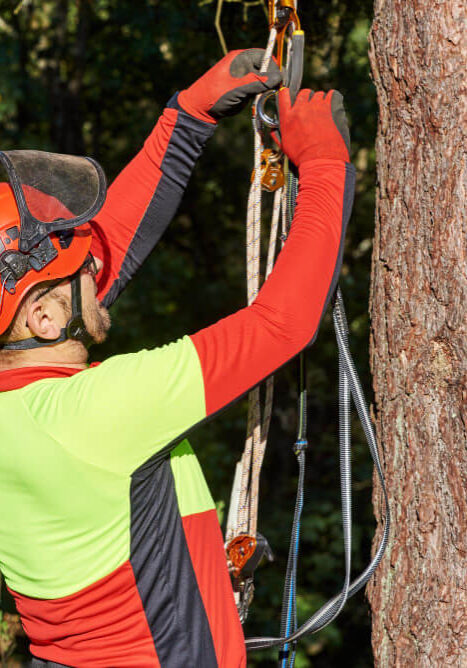
Tree Pruning & Crown Shaping does two things at once when done right: it strengthens structure against wind and snow load, and it changes fire behavior under the canopy. We remove deadwood, thin the interior where it is overly dense, and lift lower limbs to break the ladder from ground fuels into the crown. A common target is six to ten feet of vertical clearance above grade for mature trees where people can walk or mow underneath, adjusting for tree size and form. On young or small trees, we do not over-lift. Preserving taper and branch distribution is still the first rule for tree health.
Clearances around structures are specific. We like to keep all branches at least ten feet from chimneys and stovepipe vents. For roofs, we look not only at overhang but at where falling debris lands. If a roof valley sits under a limb that sheds heavily in late summer, we either adjust the cut or adjust the cleaning schedule. Metal gutters with leaf guards help, but guards are not a license to ignore cleaning. Embers will test anything that lets them rest.
Crown shaping is not topping. We never top trees. Topping creates weak, fast-growing sprout clusters that are more likely to break in storms and more likely to carry fire in a dense tangle. When clients worry about height, we guide toward selective reduction cuts that move energy to lateral branches and maintain the natural form.
Cable and bracing, because not every dangerous tree must go
When a tree has a structural defect but strong overall vitality, Tree Cable and Bracing can buy decades. We install dynamic or static systems depending on species and defect. A twin-trunk maple with a widening union, for instance, may take a high-strength cable to share load, while a heavy limb over a driveway might get a threaded rod through a weak attachment point. We pair structural support with reduction pruning to ease weight.
There are limits. If decay extends around most of a trunk or into the root flare, no amount of hardware will make it safe. That moves us into Dangerous Tree Assessment and Removal territory. We do not call removals lightly. We walk clients through why the risk profile is unacceptable, show decay detection results when available, and plan removals to protect remaining plantings and soil structure. After removals, Stump Removal & Grinding helps eliminate the lingering fuel and pest habitat an old stump can become. Grinding to six to eight inches below grade is typical for lawns, deeper where future planting needs it.
Hard surfaces and smart edges
Hardscape does not have to look like a runway to work as a fuel break. Paths of decomposed granite, flagstone patios with gravel joints, and bands of river rock against the foundation all create discontinuities. Driveways, if flanked by low, irrigated plantings rather than tall hedges, can serve as both access routes for crews and breaks for fire.
Fences are a frequent blind spot. A wooden fence that touches the house essentially wicks flame to the structure. We replace the last five to ten feet of fence that connects to the house with noncombustible material. Small changes like this, though not glamorous, create meaningful speed bumps for flames and embers.
Irrigation: where water changes outcomes
A dry landscape can be designed to resist embers, but water expands your margin. We set emitters to wet the rooting zones and the first inch of mulch. Overhead irrigation that cannot be used during red flag conditions, or that creates lush growth you cannot maintain, can backfire. Drip lines in beds and low-angle micro-sprays for groundcovers match the goal. In the noncombustible zone, we keep irrigation minimal or use subsurface only, since the surface material is rock, not mulch.
When water is scarce, plant palette and spacing do the heavy lifting. Mediterranean shrubs that hold form under low water, paired with deep, infrequent drip cycles, can stay green without feeding a fire. We favor plant mixes that do not all dry out at once in late summer.
A real property, a real test
A couple in their seventies called after a wind-driven event pushed smoke into town. Their corner lot had a roofline shaded by three mature ponderosa pines and a screen of old juniper along the sidewalk. The house had a composite shingle roof, aluminum gutters, and bark mulch all the way to the foundation.
We kept the pines. We thinned the interior whorls, removed deadwood, and lifted the lowest limbs to eight feet. A double leader over the driveway got a reduction cut and a single static cable high in the crown. A Certified Arborist Consultation included a resistograph test at the base of the largest tree, which showed sound wood outside a small central decay common in older pines.
The junipers went. We offered alternatives for privacy, and they chose a cedar fence with a narrow bed of Karl Foerster grass set back three feet from the sidewalk. Along the foundation, we replaced bark with river rock, moved the roses to a bed ten feet off the wall, and set drip lines on timers. The crew did Stump Removal & Grinding the day after the junipers came out, then leveled the grindings and topped with rock.
That fall, a grass fire two blocks away spewed embers across the neighborhood. They found a handful in the rock bed, and a char mark on the fence where a neighbor’s hedge had flashed. The pines dropped needles, which collected, then blew off the clean roof valley without catching. The homeowners called to say they slept through the night.
Routine beats heroics
Ember resistance is a habit. The best design fails if gutters remain packed after a windstorm. We build maintenance calendars with clients around local patterns. Where summers dry down by late July, we frontload pruning and cleanout work in spring, do a second pass in late August, and schedule deep irrigation before red flag stretches. After any wind event that litters the yard, we ask clients to walk the first five feet around the house with a broom, to check under decks with a flashlight, and to peek into the corners of steps and fences where eddies form.
Roof cleaning is not optional. Even metal roofs collect debris at flashings and valleys. Screens on vents, particularly under-eave and gable vents, keep embers out. On older homes, we often advise a qualified contractor to replace vent screens with 1/8-inch corrosion-resistant mesh. That is not our trade, but it is part of the same fabric of risk reduction.
Quick homeowner checks that pay off
- Keep the first five feet around structures free of wood mulch, leaf litter, and shrubs that touch siding.
- Clean roofs and gutters at least twice during fire season, plus after any major wind event.
- Limb up mature trees to create six to ten feet of clearance from the ground, and remove deadwood you can safely reach.
- Break up continuous hedges near driveways and fences, or replace the section that touches the house with noncombustible material.
- Move stacked firewood, lumber, and compost piles at least thirty feet from buildings during high-risk months.
When removal is the right answer
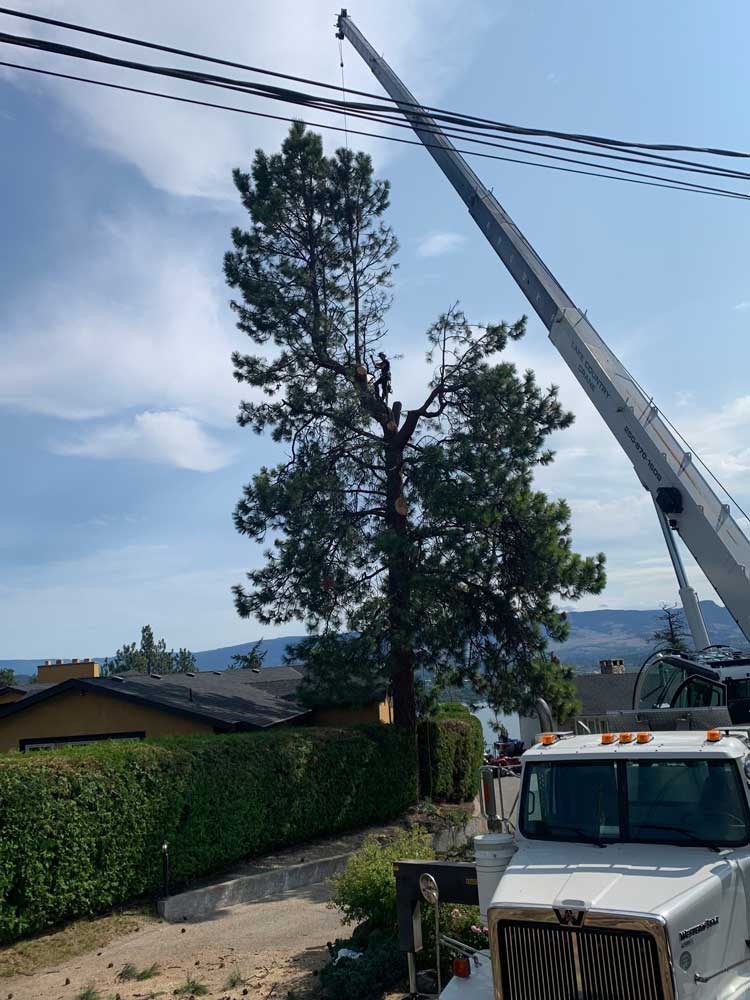
No one likes losing a tree, least of all the people who care for them. We use Dangerous Tree Assessment and Removal when the math is unforgiving. Signs that move us toward removal include fruiting bodies at the base of the trunk, extensive bark sloughing, soil heaving on the windward side of lean, and imaging that shows hollow sections compromising structural integrity. Trees that have grown into power service lines must be coordinated with utilities. In urban settings, permits may require replacement trees, and we plan for species and placements that support FireSmart goals from the start.
Stump Removal & Grinding after removals does more than tidy the look. Old stumps feed root suckers that can crowd the area with flammable young growth, and they hold embers if a fire passes through. Grinding followed by soil amendment prepares the site for a safer replanting or for the hardscape that completes the noncombustible zone.
Emergencies do not wait for business hours
Branch failures and windthrows happen at night and on weekends. Our Emergency Tree Services line exists for that reason. The first priority is scene safety - downed lines, blocked egress, and compromised roofs direct the order of operations. We coordinate with utilities and first responders, set temporary stabilization if needed, and remove hazards methodically to avoid secondary damage. After the immediate hazard is gone, we circle back to assess the altered canopy and make a plan to restore balance and maintain FireSmart spacing.
What to expect from a Certified Arborist Consultation
- A full walk-through of the property with you, noting species, structure clearances, fuel continuity, and site conditions like slope and prevailing winds.
- A written map with recommended actions prioritized by risk and season, including Tree Pruning & Crown Shaping, removals, and irrigation adjustments.
- Clear identification of trees that are candidates for Tree Cable and Bracing rather than removal, with pros, cons, and expected lifespan for the intervention.
- A maintenance schedule that fits your capacity, plus pointers on when to call us versus what you can handle safely.
- Ballpark costs for each item, framed as phases so you can tackle the highest-impact work first.
Costs, phasing, and how we make decisions
Clients deserve real numbers. Ranges vary by market, access, and tree size, but here is a sense of the scale we see:
- Pruning a mid-size tree typically runs 300 to 800 dollars, more for large, complex canopies that require rigging.
- Tree Removal Services span 1,000 to 3,500 dollars for street-accessible trees, higher for cranes or tight inner courtyards.
- Stump Removal & Grinding averages 150 to 400 dollars per stump, deeper or larger diameters pushing the upper end.
- Tree Cable and Bracing systems usually fall between 400 and 1,200 dollars per tree, depending on hardware type and number of placements.
- A stand-alone Certified Arborist Consultation commonly costs 150 to 350 dollars, often credited toward work if you proceed.
We phase projects so the first dollars do the most good: clean the five-foot zone, prune for clearance away from roofs and chimneys, thin ladder fuels, and address any single dangerous tree that threatens the house. The more aesthetic refinements - new plantings, upgraded patios, or fence replacements - slot in as budget allows.
Edge cases and thoughtful exceptions
A heritage tree near a historic home asks for more care than blunt rules allow. We have retained mature conifers within ten feet of eaves when they were integral to a site’s character and after thorough cleaning and pruning reduced the risk to a level the owners accepted. The trade-off: stricter maintenance, metal gutter protection, and more frequent inspections.
Wildlife habitat also matters. Snags and brush piles serve birds and small mammals, but they do not belong near structures in fire season. We relocate habitat features to the far side of the thirty-foot zone or beyond, pairing them with irrigated green zones that slow fire approach.
On steep slopes, we push spacing and do more understory removal uphill of structures. Radiant heat is an underrated threat on slopes, and mirrored glass or vinyl siding can deform quickly. That leads into building envelope advice, which we coordinate with licensed contractors but mention during consultations because the landscape and the house share the same risk profile.
HOAs and city ordinances sometimes conflict with FireSmart best practices. We work inside the rules where possible and provide documentation when requests deviate for safety reasons. Many boards, when presented with a certified arborist’s risk assessment, allow exceptions to hedge height or species lists.
Choosing replacements and keeping beauty in view
People imagine a fire-safe yard as gravel and agaves. It does not need to be. In the first five feet, rock and pavers look clean and permanent, and they welcome planters that can be moved when conditions worsen. Beyond that strip, ornamental grasses, salvias, heuchera, lavender in controlled beds, and small fruiting trees can fill space with color and texture. Deciduous shade over patios can still drop gold in autumn without dropping embers into gutters if the canopy is kept off the roofline.
Privacy screens do not require continuous fuel. A sequence of fence panels with vines set back a couple of feet, broken by a stone path, stops fire while softening views. Clients who once clung to juniper hedges usually like their layered replacements better after a season.
A note on tools and timing
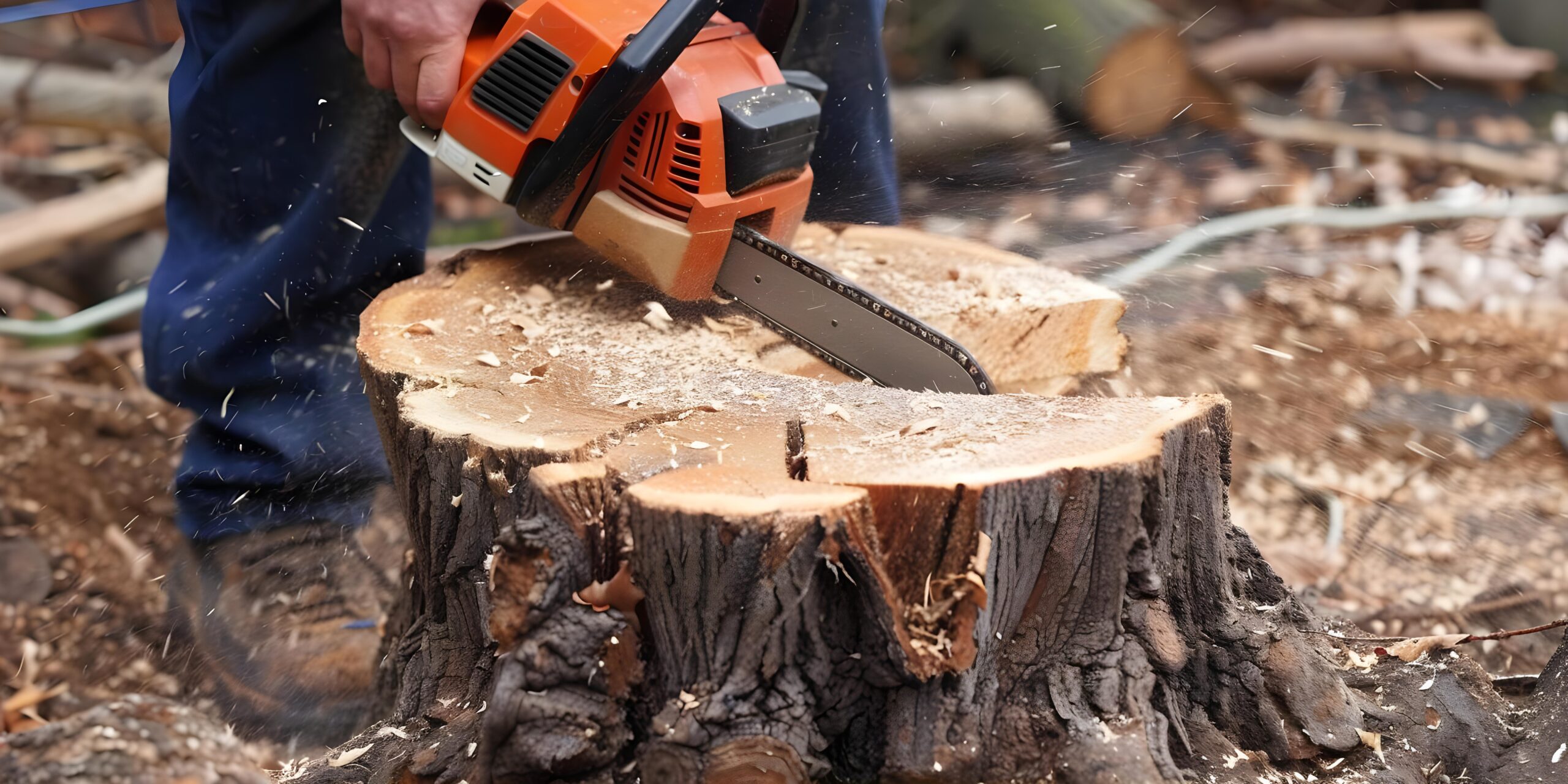
We schedule heavy pruning outside peak sap flow and bird nesting windows where possible. For many species, late winter to early spring works well, with a second light pass in late summer for deadwood and clearance refinement. Power equipment stays sharp to make clean cuts. On removals near structures, we rig with an eye to where debris could collect. A branch that sheds chips into a chimney chase is a problem, so we adjust drop zones and cleanup routines accordingly.
Mulch gets special treatment. Shredded bark travels and catches embers more readily than larger chips or composted fines. In beds beyond the five-foot zone, we prefer composted mulch kept moist and thin. Where the look demands bark, we confine it to island beds that are not bridged to the house by plants.
When to call, when to do it yourself
Homeowners are fully capable of critical tasks: pulling mulch off the foundation, sweeping decks, cleaning ground litter, watering correctly, and keeping grass short. Anything involving roof work, significant pruning, or trees overhanging wires belongs to trained crews. If a limb size exceeds what you can handle comfortably with both feet on the ground, stop and call. Our Emergency Tree Services crew would rather remove a precarious stub safely than show up after a ladder fall.
The steady path to resilience
Fire is part of the landscape in much of our region. Accepting that truth turns fear into a checklist and a calendar. FireSmart Tree Services ties arborist craft to that steady work. The result is a property that feels cared for and looks intentional, one that gives you shade in July and lets you sleep on a windy September night. It replaces vague anxiety with clear steps, and it respects both the trees you love and the house they shelter.
If you want help prioritizing, ask for a Certified Arborist Consultation. We will walk the yard with you, name the near-term wins, and plan the bigger moves. Whether that means precise Tree Pruning & Crown Shaping, well-placed Tree Cable and Bracing, or, where it is the safe choice, Dangerous Tree Assessment and Removal followed by Stump Removal & Grinding, the aim stays simple. Break the fire’s path, keep the beauty, and build habits that last.
Ace Tree Services Ltd.
Name: Ace Tree Services Ltd.Address: 4656 Wallace Hill Road, Kelowna, BC
Postal code: V1W 4C2
Phone: 250-212-9593
Website: https://acetree.ca/
Hours:
Monday: 7:00 AM - 5:00 PM
Tuesday: 7:00 AM - 5:00 PM
Wednesday: 7:00 AM - 5:00 PM
Thursday: 7:00 AM - 5:00 PM
Friday: 7:00 AM - 5:00 PM
Saturday: 7:00 AM - 5:00 PM
Sunday: Closed
Open-location code (plus code): RHF8+8G Kelowna, British Columbia, Canada
Map/listing URL: https://www.google.com/maps/place/Ace+Tree+Services+Ltd./@49.8232606,-119.4337283,659m/data=!3m2!1e3!4b1!4m6!3m5!1s0x537d8b1d074815c5:0x450b88afa7a41435!8m2!3d49.8232606!4d-119.4337283!16s%2Fg%2F11ydkpnh22
Embed iframe:
"@context": "https://schema.org", "@type": "HomeAndConstructionBusiness", "name": "Ace Tree Services Ltd.", "url": "https://acetree.ca/", "telephone": "250-212-9593", "address": "@type": "PostalAddress", "streetAddress": "4656 Wallace Hill Road", "addressLocality": "Kelowna", "addressRegion": "BC", "addressCountry": "CA" , "openingHoursSpecification": [ "@type": "OpeningHoursSpecification", "dayOfWeek": "https://schema.org/Monday", "opens": "07:00", "closes": "17:00" , "@type": "OpeningHoursSpecification", "dayOfWeek": "https://schema.org/Tuesday", "opens": "07:00", "closes": "17:00" , "@type": "OpeningHoursSpecification", "dayOfWeek": "https://schema.org/Wednesday", "opens": "07:00", "closes": "17:00" , "@type": "OpeningHoursSpecification", "dayOfWeek": "https://schema.org/Thursday", "opens": "07:00", "closes": "17:00" , "@type": "OpeningHoursSpecification", "dayOfWeek": "https://schema.org/Friday", "opens": "07:00", "closes": "17:00" ], "geo": "@type": "GeoCoordinates", "latitude": 49.8232606, "longitude": -119.4337283 , "hasMap": "https://www.google.com/maps/place/Ace+Tree+Services+Ltd./@49.8232606,-119.4337283,659m/data=!3m2!1e3!4b1!4m6!3m5!1s0x537d8b1d074815c5:0x450b88afa7a41435!8m2!3d49.8232606!4d-119.4337283!16s%2Fg%2F11ydkpnh22"
Ace Tree Services Ltd. provides professional tree removal, pruning, stump grinding, emergency response, and arborist consultations for properties in Kelowna and across the Okanagan Valley.
The company works with homes, commercial properties, and municipal settings where tree work needs to be planned carefully around buildings, fences, driveways, landscaping, and other site constraints.
Based in Kelowna, the team is positioned to help nearby neighbourhoods and surrounding Okanagan communities with routine tree care and time-sensitive storm cleanup.
Customers looking for careful tree work often want a crew with certified arborist training, insurance, and a methodical approach to higher-risk removals.
Services also include dangerous tree assessment, cabling and bracing, and wildfire risk reduction tree work for properties that need longer-term planning.
To request a quote or discuss tree care options, call 250-212-9593 or visit https://acetree.ca/.
A public map listing is available to help customers confirm the business location and get directions before a site visit or estimate.
For Kelowna property owners who need pruning, removals, or emergency tree help, a local tree service can make it easier to schedule site-specific recommendations and cleanup.
Popular Questions About Ace Tree Services Ltd.
What services does Ace Tree Services Ltd. provide?Ace Tree Services Ltd. lists tree removal, stump removal and grinding, tree pruning and crown shaping, emergency tree service, arborist consultation, dangerous tree assessment and removal, cabling and bracing, and wildfire risk reduction tree work.
Who does Ace Tree Services Ltd. serve?
The company describes its work as serving homes, businesses, and municipalities in Kelowna and across the Okanagan Valley.
Is emergency tree help available?
Yes. Emergency service is listed for downed or uprooted trees, dangerous tree assessment, stabilization work, and branch cleanup. If a tree is near power lines, the safest first step is to stay clear and contact the utility provider before any tree work begins.
Do I always need a permit to remove a tree?
Not always. Permit requirements can depend on where the tree is located and whether it is near a creek, lake, steep slope, or another protected area. It is best to check local rules for the specific property before removal work starts.
How deep does stump grinding usually go?
Standard stump grinding is typically described as going about 6 to 12 inches below ground level, which is often enough for grass or surface landscaping. Deeper grinding may be possible when site plans call for it.
How much of a tree can be safely removed at one time?
That depends on the species, age, health, and structure of the tree. In practice, good pruning is usually about removing the right limbs for health, clearance, and structure rather than chasing a fixed percentage.
What are common signs that a tree may be dangerous?
Large dead limbs, visible cracks, a new lean, root damage, canopy dieback, or storm-related damage can all be warning signs. Trees near structures deserve extra attention when any of those issues appear.
What is cabling and bracing in tree care?
Cabling and bracing are support systems used to reduce the risk of failure in trees with structural weaknesses that may still be worth preserving. They are generally used to add support, not to replace good assessment and ongoing maintenance.
How do I contact Ace Tree Services Ltd.?
Call 250-212-9593.Website: https://acetree.ca/.
Landmarks Near Kelowna, BC
Downtown KelownaThe downtown core is a practical reference point for lakefront neighbourhoods, mixed-use streets, and central residential properties. If your property is near downtown, tree pruning, removals, and cleanup can be planned around tighter access and nearby structures.
Knox Mountain Park
This well-known park north of downtown is a recognizable landmark for nearby homes and hillside properties. If you are close to this area, ask about tree assessment, trimming, or removal work suited to sloped sites.
Mission Creek Greenway
The greenway runs through several parts of Kelowna and is a useful landmark for nearby residential areas. If your property borders or sits near this corridor, site-specific tree planning is especially important.
Pandosy Village
Pandosy is one of Kelowna’s most recognizable neighbourhoods and a common reference point for south-central properties. If you are nearby, request help for pruning, removals, or storm cleanup around homes and small commercial sites.
Rutland
Rutland is a major east Kelowna neighbourhood with a mix of residential and local commercial properties. If you are located in or near Rutland, tree work can be scheduled for both routine maintenance and urgent situations.
Landmark District
This central business-focused area is a practical landmark for offices, service properties, and nearby residential streets. If your site is near the district, ask about careful tree work around parking, access lanes, and built-up lots.
Kelowna’s North End
The North End sits on the edge of downtown and is a useful reference for nearby homes, industrial sites, and commercial properties. If you are in this part of the city, request tree care based on the layout and constraints of the lot.
Airport District
The Airport District is a recognizable north Kelowna reference point for surrounding properties and access routes. If you are in this area, ask about tree services for residential acreage, commercial sites, or roadside cleanup needs.
Glenmore & Dilworth
These established Kelowna neighbourhoods are useful landmarks for central and north-central service calls. If your property is nearby, pruning and removal work can be tailored to mature trees and established landscapes.
Highway 97 Corridor
Highway 97 is one of the city’s main travel routes and a common way to describe location within Kelowna. If your home or property is just off the corridor, a clear landmark reference can help speed up quote scheduling and site planning.