FireSmart Tree Services for HOA and Community Standards
Wildfire is not a theoretical risk for many neighborhoods anymore. The combination of hotter summers, longer dry spells, and maturing landscapes means homeowner associations need a coordinated plan, not just good intentions. I have walked common areas after ember storms, measured scorch heights on trunks, and watched a crew remove a wind-torqued pine hanging over a cul-de-sac as ash still floated in the air. Communities that fare well do two things consistently. They set clear standards for trees and vegetation, and they line up the right expertise to implement them without turning the place into a gravel lot.
This article lays out how an HOA can translate FireSmart principles into practical standards, how to use the full toolbox of arboricultural services without wasting budget, and what pitfalls to avoid. It assumes you care about both safety and street appeal. Those goals are not opposites if you manage them with judgment.
What FireSmart actually asks of a neighborhood
FireSmart is a simple idea that gets difficult in the details. The goal is to disrupt the fire’s pathways to structures and infrastructure. In practice that means breaking up horizontal continuity of fuels, removing or reducing ladder fuels that carry flame from the ground into the canopy, and decreasing the likelihood that embers land in receptive beds.
Most jurisdictions publish defensible space zones that run from the building outward, often in three bands. The exact distances vary by state and county. A common pattern looks like this. Zero to 5 feet, noncombustible zone with rock, hardscape, or low moisture plants set back from vents and siding. Five to 30 feet, lean and clean with regular maintenance, scattered shrubs, and pruned trees. Thirty to 100 feet, reduced density and fewer ladder fuels, with canopy separation adjusted for slope and species. Within that framework, an HOA can guide both common areas and private lots with rules that reduce risk while retaining shade and privacy.
Trees deserve specific attention. They are not inherently dangerous in a wildfire context. The problem is unmanaged structure: dead wood, intertwined crowns, low branches over dry mulch, and tree placement that crowds eaves. Well managed trees can slow wind at the ground, trap embers higher where they cool, and drop less flammable material near buildings.
From guidelines to enforceable standards
A standard is something a contractor can measure with a pole and a tape, and a compliance committee can inspect without arguments. Start with outcomes, then move to measurable details.
Road and driveway clearance is a straightforward example. Fire engines vary in size, but most departments ask for 13 to 14 feet of vertical clearance above the roadway and 2 feet of horizontal clearance on each side as a minimum. If your roads carry larger equipment or sit on steep slopes, confirm with the local fire marshal. Write this into your rules so tree crews know exactly how to prune.
Canopy spacing is more nuanced. The right answer depends on species, crown form, wind exposure, and slope. As a base rule in level common areas, we often aim for 10 to 15 feet of horizontal spacing between mature crowns and 6 to 10 feet of vertical separation between the lowest branch of an upper tree and the top of a lower tree. On slopes, increase separation because flame length grows uphill. These are starting points, not rigid commands, which is why a Certified Arborist Consultation pays for itself during planning. Someone with field time can walk a stand of trees, identify crown classes and vigor, and propose targeted Tree Pruning & Crown Shaping rather than wholesale removal.
Mulch and plant selection near structures matter as much as branches. Fine bark mulch is an ember magnet. In the zero to 5 foot zone around buildings, ask owners to use gravel, pavers, or compacted decomposed granite, and move wood planters away from siding. Choose plants with higher moisture content and fewer fine, resinous fuels. Lavenders and ornamental grasses look great but can flash if not maintained, so require seasonal shearing and keep them out of the immediate zone.
The service toolbox, and when to use each tool
No single service solves wildfire risk. Risk falls when you match the right service to a specific condition, at the right time of year, and at the right scale.
Tree Pruning & Crown Shaping is your first and most frequent intervention. Target deadwood removal, lift lower branches to reduce ladder fuels, and thin congested interior growth in crowns where species tolerate it. Avoid lion-tailing, stripping interior foliage and leaving foliage only at the ends, which destabilizes the tree and increases sunscald. On conifers, focus on lifting and spacing rather than heavy thinning. On broadleaf species with good compartmentalization, selective reduction cuts can increase clearance from structures without ruining form.
Tree Cable and Bracing has a place in FireSmart work when a structurally valuable tree has a split crotch or heavy lateral that threatens a roadway or building. Properly installed systems reduce the likelihood of failure under wind load, which keeps evacuation routes open. They are not a substitute for reducing hazardous weight or addressing decay. They can, however, buy time for a phased plan, especially for heritage trees that define a streetscape.
Dangerous Tree Assessment and Removal is where you must take off the gloves. Not every declining tree is an immediate hazard. You are looking for advanced decay in critical zones, active root plate failure, severe lean with soil heaving, or major cracks in load-bearing unions. In dry years, we see entire groups of drought-stressed pines succumb to bark beetles over a single season. If you find multiple red tops in a cluster, act quickly. Removal limits the chance that a wind event drops them across a road during an evacuation. Tree Removal Services should include disposal method. Chipping and broadcast may be fine away from structures, but do not dump chips deep in the first 30 feet around homes. Consider hauling or using chips as erosion control on disturbed slopes outside the immediate zone.
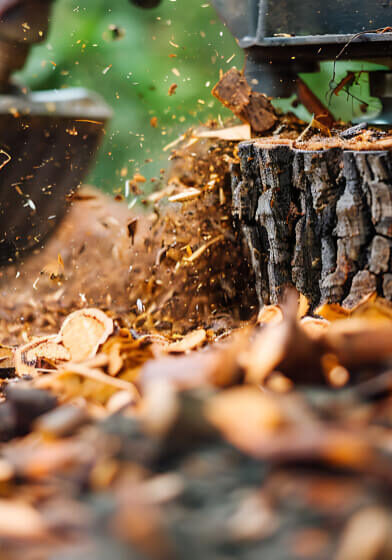
Stump Removal & Grinding is not just an aesthetic step. Fresh stumps can respout in some species, sending up dense, flammable shoots near structures. Grinding to a depth of 6 to 12 inches, then excavating grindings in that 5 foot zone and backfilling with mineral soil or gravel, reduces ember receptivity. In erosion-prone areas, replace the stump area with boulders or a low wall to break slope length rather than replanting with shrubs right away.
Emergency Tree Services are worth lining up before you need them. A red flag wind event does not respect business hours. A contract with a local firm that can mobilize within one to two hours to clear a blocked roadway or remove a struck tree from a roof should be in the HOA’s binder. Confirm their crane access, traffic control capacity, and disposal sites. When a fire front has passed, emergency crews can also make fast, safe decisions about snags and hangers that threaten returning residents.
Certified Arborist Consultation should frame the program. Bring an ISA Certified Arborist into the planning stage and again after major events. A two hour walk with the property manager, board member, and the arborist through representative sections of the community will surface the real issues, not just the visible ones. You will leave with a prioritized list, a sense of timeline, and a sequence of work that spreads cost over fiscal years without leaving glaring vulnerabilities.
FireSmart Tree Services, when offered as a package by a contractor, usually bundle the practices above with site specific recommendations on spacing, mulch, and species. A good vendor ties their scope to your standards, not the other way around. Your job is to write the standards first, then hire to that spec.
A realistic seasonal rhythm
I have seen HOAs try to tackle everything in April, then scramble again in August. A better rhythm spreads work across the year and respects biology.
Winter is for structure. With deciduous trees bare, visibility improves. Crews can spot squirrel or bird nests as they form in spring, but during winter they can see deadwood and structure better and spend less time on cleanup. Frozen or firm ground also reduces lawn damage from equipment. Use winter to prune canopy trees away from roofs, set roadway clearances, and install any needed Tree Cable and Bracing.
Spring focuses on growth edges. After the last frost, crews can reduce shrub mass, edge back plantings from siding, and limn the five foot noncombustible zones. Spring is also the time to review irrigation. Drying shrubs because a valve is stuck half open is an avoidable problem.
Summer is discipline and monitoring. Mow fine fuels regularly, maintain 4 to 6 inches clearance at fence bottoms so weeds do not wick fire to wood, and keep sightlines open at corners for evac routes. If a red flag period is forecast, schedule a quick sweep to remove fallen branches and check that visible address markers are not obscured by vegetation.
Fall is a second chance to fix what spring missed. As leaf drop begins, consider another pass on gutters and roof valleys. If drought stress shows up late in the season, consider deep watering for high value trees, especially those near entry roads that you cannot afford to lose to winter wind storms.
Balancing aesthetics with fire performance
Boards worry, rightly, that aggressive fuel management will make the community look barren. The trick is to manage density, not eliminate character. Use staggered placements so trees do not form a https://rentry.co/ycv2hiiu contiguous canopy. Choose understory plants that fit beneath lifted canopies while maintaining vertical separation. In front yards, swap a single large shrub mass for spaced clusters that interrupt embers and reduce flame continuity. And remember, healthy green lawns are not the only answer. Mixed beds with boulders, low succulents, and spaced perennials can read as lush if irrigated correctly.
Where privacy screens meet eave lines, especially on side yards, re-evaluate. If foliage touches a wall, it becomes part of the building in fire terms. Slide the screen outward, reduce its height, or replace it with a trellis of nonflammable material set away from the structure.
Policy, permits, and the human part of the job
Standards on paper do little unless the HOA enforces them consistently and fairly. Write rules in plain language with measurable criteria. Include photos of compliant and noncompliant examples in the owner handbook. Provide a grace period and coaching for the first season you roll out the program. After that, keep to your notice timeline.
Permitting can trip up even a well planned program. Many cities require a permit to remove or significantly prune trees above a certain size or of protected species. Coordinate with your local urban forestry department. A Certified Arborist can provide the documentation needed for Dangerous Tree Assessment and Removal, often including a written report with photos and decay detection results if used. Cutting first and asking forgiveness later risks fines and reputational damage for the community.
Disputes happen. A homeowner may love a cypress that now threatens a roadway with low, resinous limbs. Bring them into a site walk with the arborist, show them the ladder fuel profile, and offer options. Sometimes crown reduction combined with a reshaped understory gets you 80 percent of the risk reduction while preserving character. Other times, the right answer is removal and replanting with a more appropriate species.
Contracts, credentials, and the difference between bids
I have reviewed dozens of tree service bids for HOAs. The cheapest line item rarely stays cheap. Scope clarity matters most. Define units. Per tree for pruning is fine if the spec notes diameter class, crown size, and objective. Roadway clearance should reference linear feet or centerline miles. Stump grinding should specify depth and removal or retention of grindings, especially within the first 5 feet of structures.
Require proof of insurance appropriate to tree work, not landscaping. Ask for ISA Certified Arborists on staff, not just as a consultant. For larger removals near structures, confirm that the company has a crane partner and knows traffic control requirements. Ask how they handle wildlife encounters and nesting birds. Good firms have seasonal protocols and will reschedule or adjust methods rather than steamroll through.
Price ranges help boards plan. As a rough guide, pruning a typical street tree can run a few hundred dollars, while complex removals with crane support can jump into the low thousands, depending on size and access. Stump grinding often aligns with diameter at ground level and site complexity. Spread the heavy work over two to three fiscal years if needed, but do not delay high hazard removals.
A brief case from a wind corridor
One foothill community I advised sits in a narrow valley that funnels afternoon winds. Their street trees were mostly mature modesto ash and redwoods, planted tightly 25 years ago when lots were new. After two seasons of drought, they had several redwood tops dying back, lots of interior deadwood, and privacy hedges touching eaves in dozens of side yards.
The HOA board adopted a FireSmart standard that lifted conifers to 10 feet above grade where form allowed, reduced stems within 5 feet of structures to noncombustible materials, and required 12 feet of crown separation on the windward side of homes. They staged removals over three winters, taking out only those trees with high risk indicators or those needed to break continuous canopy. They also converted 3 foot mulch bands around building perimeters to gravel and pavers.
Two summers later, an ember storm came off a ridge fire 8 miles away. Ash fell for hours. The community lost a fence and two ornamental junipers in side yards where owners had delayed compliance. No structures ignited. The fire chief’s after action note credited the lack of receptive fuel beds in the first five feet and the lifted conifer crowns that kept surface flames from finding ladders during spot ignitions.
Wildlife, heritage trees, and other edge cases
Wildlife habitat and fire mitigation are not enemies. Nesting seasons are real, and your vendors should adjust timing for heavy work. Schedule major pruning for outside of peak nesting windows where possible. When emergency work is unavoidable, document and consult with local wildlife rescue if nests are discovered.
Heritage or landmark trees require a different approach. If a signature valley oak leans over the clubhouse patio, removal is not your first choice. Start with a detailed inspection. Resistograph or sonic tomography can quantify decay if suspected. If wood strength is adequate, combine modest crown reduction to reduce sail, selective weight reduction on heavy laterals, and, if indicated, Tree Cable and Bracing to stabilize a weak union. Revisit the tree annually. A heritage tree program that includes mulching outside the 5 foot zone, avoiding soil compaction, and supplemental deep watering during drought can extend life and maintain safety.
Slopes complicate everything. Flame length increases uphill, so spacing standards that work on flat ground may be insufficient. On slopes above 20 percent, increase vertical separation and consider terraces or rock features to interrupt run. Avoid leaving continuous chip blankets on steep slopes. Instead, use fiber rolls or sparse chip placement to control erosion without creating a uniform receptive fuel bed.
Neighbor disputes over boundary trees are common. Document property lines for trees whose trunks sit near boundaries. Many states treat boundary trees as joint property. Your rules should spell out responsibility for shared trees and the process for decisions, including when Dangerous Tree Assessment and Removal is required.
A quick start for boards that need momentum
- Schedule a Certified Arborist Consultation to walk common areas and set site specific targets tied to your jurisdiction’s defensible space rules.
- Draft measurable standards with photos, including roadway clearances, crown separations, and a noncombustible 0 to 5 foot building perimeter requirement.
- Bid a first year scope that tackles high hazard removals, roadway clearances, and zero to 5 foot zone corrections near all structures.
- Educate owners with a simple guide that explains how Tree Pruning & Crown Shaping improves safety without ruining shade or privacy.
- Put an Emergency Tree Services agreement in place with response times, after hours contacts, and priorities for road clearance and structural protection.
Emergency readiness, when hours matter
Wildfire response is not only about fuels. It is also about choreography when a red flag warning becomes a real incident. You need a playbook that everyone understands.
- Designate a point person on the board or management team who can activate vendors, communicate with residents, and coordinate with public safety.
- Pre stage, if feasible, signage and cones for temporary road closures, and verify that greenbelts and fire lane gates open easily. Lubricate and test latches twice per year.
- Trigger a rapid inspection after a wind or ember event. A two person crew can sweep primary roads, note hangers, and request immediate Dangerous Tree Assessment and Removal where needed.
- Maintain a contact tree so residents can report blocked routes or damaged trees without clogging 911. Route those reports to the point person and vendor.
- After the event, schedule a follow up Certified Arborist Consultation to reassess. Trees that looked safe pre fire can change condition after heat exposure, and quick pruning may prevent later failures.
Putting FireSmart to work without losing your identity
A FireSmart standard is not a mandate to strip your neighborhood bare. It is a commitment to steward the living infrastructure with skill. Good Tree Removal Services take down the few that no longer belong, Stump Removal & Grinding prevents bad regrowth where it matters, Tree Pruning & Crown Shaping maintains structure and beauty, and Tree Cable and Bracing preserves character trees that still have the wood to stand. Emergency Tree Services fill the gap when nature tests your system, and Certified Arborist Consultation keeps the program honest and adaptive.
The communities that thrive treat FireSmart work as routine property care, not as a panic response. They budget modestly each year, communicate why standards exist, and show residents how a tidy five foot band of gravel and a lifted canopy can be just as beautiful as a bed of bark pressed against a wall. They make peace with the fact that a tree’s value changes with context and time. And they remember that preparation is less about perfection than about reducing the chance that one ember lands in just the wrong spot.
Ace Tree Services Ltd.
Name: Ace Tree Services Ltd.Address: 4656 Wallace Hill Road, Kelowna, BC
Postal code: V1W 4C2
Phone: 250-212-9593
Website: https://acetree.ca/
Hours:
Monday: 7:00 AM - 5:00 PM
Tuesday: 7:00 AM - 5:00 PM
Wednesday: 7:00 AM - 5:00 PM
Thursday: 7:00 AM - 5:00 PM
Friday: 7:00 AM - 5:00 PM
Saturday: 7:00 AM - 5:00 PM
Sunday: Closed
Open-location code (plus code): RHF8+8G Kelowna, British Columbia, Canada
Map/listing URL: https://www.google.com/maps/place/Ace+Tree+Services+Ltd./@49.8232606,-119.4337283,659m/data=!3m2!1e3!4b1!4m6!3m5!1s0x537d8b1d074815c5:0x450b88afa7a41435!8m2!3d49.8232606!4d-119.4337283!16s%2Fg%2F11ydkpnh22
Embed iframe:
"@context": "https://schema.org", "@type": "HomeAndConstructionBusiness", "name": "Ace Tree Services Ltd.", "url": "https://acetree.ca/", "telephone": "250-212-9593", "address": "@type": "PostalAddress", "streetAddress": "4656 Wallace Hill Road", "addressLocality": "Kelowna", "addressRegion": "BC", "addressCountry": "CA" , "openingHoursSpecification": [ "@type": "OpeningHoursSpecification", "dayOfWeek": "https://schema.org/Monday", "opens": "07:00", "closes": "17:00" , "@type": "OpeningHoursSpecification", "dayOfWeek": "https://schema.org/Tuesday", "opens": "07:00", "closes": "17:00" , "@type": "OpeningHoursSpecification", "dayOfWeek": "https://schema.org/Wednesday", "opens": "07:00", "closes": "17:00" , "@type": "OpeningHoursSpecification", "dayOfWeek": "https://schema.org/Thursday", "opens": "07:00", "closes": "17:00" , "@type": "OpeningHoursSpecification", "dayOfWeek": "https://schema.org/Friday", "opens": "07:00", "closes": "17:00" ], "geo": "@type": "GeoCoordinates", "latitude": 49.8232606, "longitude": -119.4337283 , "hasMap": "https://www.google.com/maps/place/Ace+Tree+Services+Ltd./@49.8232606,-119.4337283,659m/data=!3m2!1e3!4b1!4m6!3m5!1s0x537d8b1d074815c5:0x450b88afa7a41435!8m2!3d49.8232606!4d-119.4337283!16s%2Fg%2F11ydkpnh22"
Ace Tree Services Ltd. provides professional tree removal, pruning, stump grinding, emergency response, and arborist consultations for properties in Kelowna and across the Okanagan Valley.
The company works with homes, commercial properties, and municipal settings where tree work needs to be planned carefully around buildings, fences, driveways, landscaping, and other site constraints.
Based in Kelowna, the team is positioned to help nearby neighbourhoods and surrounding Okanagan communities with routine tree care and time-sensitive storm cleanup.
Customers looking for careful tree work often want a crew with certified arborist training, insurance, and a methodical approach to higher-risk removals.
Services also include dangerous tree assessment, cabling and bracing, and wildfire risk reduction tree work for properties that need longer-term planning.
To request a quote or discuss tree care options, call 250-212-9593 or visit https://acetree.ca/.
A public map listing is available to help customers confirm the business location and get directions before a site visit or estimate.
For Kelowna property owners who need pruning, removals, or emergency tree help, a local tree service can make it easier to schedule site-specific recommendations and cleanup.
Popular Questions About Ace Tree Services Ltd.
What services does Ace Tree Services Ltd. provide?Ace Tree Services Ltd. lists tree removal, stump removal and grinding, tree pruning and crown shaping, emergency tree service, arborist consultation, dangerous tree assessment and removal, cabling and bracing, and wildfire risk reduction tree work.
Who does Ace Tree Services Ltd. serve?
The company describes its work as serving homes, businesses, and municipalities in Kelowna and across the Okanagan Valley.
Is emergency tree help available?
Yes. Emergency service is listed for downed or uprooted trees, dangerous tree assessment, stabilization work, and branch cleanup. If a tree is near power lines, the safest first step is to stay clear and contact the utility provider before any tree work begins.
Do I always need a permit to remove a tree?
Not always. Permit requirements can depend on where the tree is located and whether it is near a creek, lake, steep slope, or another protected area. It is best to check local rules for the specific property before removal work starts.
How deep does stump grinding usually go?
Standard stump grinding is typically described as going about 6 to 12 inches below ground level, which is often enough for grass or surface landscaping. Deeper grinding may be possible when site plans call for it.
How much of a tree can be safely removed at one time?
That depends on the species, age, health, and structure of the tree. In practice, good pruning is usually about removing the right limbs for health, clearance, and structure rather than chasing a fixed percentage.
What are common signs that a tree may be dangerous?
Large dead limbs, visible cracks, a new lean, root damage, canopy dieback, or storm-related damage can all be warning signs. Trees near structures deserve extra attention when any of those issues appear.
What is cabling and bracing in tree care?
Cabling and bracing are support systems used to reduce the risk of failure in trees with structural weaknesses that may still be worth preserving. They are generally used to add support, not to replace good assessment and ongoing maintenance.
How do I contact Ace Tree Services Ltd.?
Call 250-212-9593.Website: https://acetree.ca/.
Landmarks Near Kelowna, BC
Downtown KelownaThe downtown core is a practical reference point for lakefront neighbourhoods, mixed-use streets, and central residential properties. If your property is near downtown, tree pruning, removals, and cleanup can be planned around tighter access and nearby structures.
Knox Mountain Park
This well-known park north of downtown is a recognizable landmark for nearby homes and hillside properties. If you are close to this area, ask about tree assessment, trimming, or removal work suited to sloped sites.
Mission Creek Greenway
The greenway runs through several parts of Kelowna and is a useful landmark for nearby residential areas. If your property borders or sits near this corridor, site-specific tree planning is especially important.
Pandosy Village
Pandosy is one of Kelowna’s most recognizable neighbourhoods and a common reference point for south-central properties. If you are nearby, request help for pruning, removals, or storm cleanup around homes and small commercial sites.
Rutland
Rutland is a major east Kelowna neighbourhood with a mix of residential and local commercial properties. If you are located in or near Rutland, tree work can be scheduled for both routine maintenance and urgent situations.
Landmark District
This central business-focused area is a practical landmark for offices, service properties, and nearby residential streets. If your site is near the district, ask about careful tree work around parking, access lanes, and built-up lots.
Kelowna’s North End
The North End sits on the edge of downtown and is a useful reference for nearby homes, industrial sites, and commercial properties. If you are in this part of the city, request tree care based on the layout and constraints of the lot.
Airport District
The Airport District is a recognizable north Kelowna reference point for surrounding properties and access routes. If you are in this area, ask about tree services for residential acreage, commercial sites, or roadside cleanup needs.
Glenmore & Dilworth
These established Kelowna neighbourhoods are useful landmarks for central and north-central service calls. If your property is nearby, pruning and removal work can be tailored to mature trees and established landscapes.
Highway 97 Corridor
Highway 97 is one of the city’s main travel routes and a common way to describe location within Kelowna. If your home or property is just off the corridor, a clear landmark reference can help speed up quote scheduling and site planning.