FireSmart Tree Services: Ladder Fuel Reduction
Wildfire spreads by finding a continuous path of burnable material. Around homes and cabins, that path often runs from dried grass to shrubs to the lower limbs of trees, then into the canopy. Arborists call those vertical pathways ladder fuels. Reducing them is one of the most effective, measurable ways to make a property survivable in a fire event. It is work done on a calm day that matters on the worst one.
I have walked hundreds of properties after https://ameblo.jp/landenqozh155/entry-12966297740.html hot summers and hard wind events. The houses that fare best tend to share three traits. First, uninterrupted breaks in vegetation near structures. Second, trees with clean lower stems and space between crowns. Third, ongoing maintenance so last year’s good work does not unravel with this year’s growth and litter. FireSmart Tree Services is essentially the craft of building and keeping those three traits in place, with sound arboriculture at every step.
What ladder fuels are and why they matter
Ladder fuels include anything that helps a surface fire climb. Tall, cured grasses and thatch are the first rung, followed by shrubs like juniper or cedar hedges, then low branches and deadwood on trunks. A wind driven grass fire with 30 to 60 centimeter flame lengths will normally scorch bark and pass. Add dense shrubs and branches that hang down to a meter off the ground, and flame lengths can triple, preheating and igniting the lower crown. Once fire crowns, embers start flying. At that point, distance and building hardening must do all the work.
I often show clients a three minute demonstration. We prune the lower two meters of a small pine, rake needles to mineral soil, and cut back the ornamental juniper touching the trunk. Then we light a small, controlled test in a metal pan a few meters away. The heat is palpable yet the clean stem and lack of nearby fuel make ignition much less likely. The physics are simple. Remove preheating, reduce flame attachment time, and you cut the chance of torching by a wide margin.
How we read a site before touching a saw
No two properties carry fuel the same way. On north slopes in the interior, I see thick duff and moss that smolder. On south slopes near town, wind cured grasses become flash fuel by early July. A Certified Arborist Consultation starts with mapping these fuel types and how they stack. We walk from the structure outward, looking for continuous vertical and horizontal connections. The process is deliberate because vision saves money and trees.
Close to the home, I focus on the first 1.5 to 2 meters. This zone should not carry flame at all. That means non combustible ground cover like gravel around footings, clear vents, and no bark mulch against siding. From there out to roughly 10 meters, pruning and spacing take over. Beyond 10 meters, thinning and canopy management make the difference. The exact distances adjust with slope, wind exposure, and building materials. A house with a Class A roof and mesh screened vents buys you forgiveness. A wood shake roof and unscreened soffits demand a wider, cleaner break.
I also pay close attention to species. Resin rich conifers like pine, spruce, and juniper ignite more readily. Aspen, birch, and many maples tend to resist ignition, especially when well hydrated. That does not make broadleaf trees fireproof, but it gives us options. We often leave healthy deciduous trees in a windbreak while ladder pruning nearby conifers to raise crown base height.
The craft of ladder fuel reduction
Good ladder fuel reduction looks tidy but not sterile. It keeps trees vigorous while interrupting fire pathways. That balance matters. Strip too much foliage at once and you stress the tree, invite sunscald, or push epicormic sprouting. Remove too little and you have done expensive yard work that yields little fire benefit.
Tree Pruning & Crown Shaping is the backbone. On conifers near structures, we typically raise crown base height to 2 to 3 meters from grade, or to one third of the tree’s height on smaller specimens, whichever is less aggressive. We target dead, diseased, or downward facing branches first, then selectively remove live branches to open vertical clearance. Cuts are clean, just outside the branch collar, to support natural sealing. On multi stemmed ornamentals, we thin interior crossings that could carry embers into the canopy.
Shrub management comes next. Ornamental juniper, cedar hedges, and dense rosemary beds look green yet often contain dry interior that lights quickly. We reduce height and bulk so there is no contact with tree trunks or wooden structures, and we break up continuous beds with stone or flagged paths. In places where shrubs provide privacy, we plan staggered clusters with non combustible breaks rather than a solid hedge.
Ground fuels round out the picture. We mow and edge fine fuels tight to the ground, then swap bark mulch for decorative rock within the immediate home zone. If a client loves the look of wood mulch, we keep it beyond 1.5 to 2 meters and maintain crisp edging. Pine needle drifts and cones are raked away from trunks and eaves. The work is quiet, mostly hand tools and rakes, yet it changes the fire behavior profile overnight.
Practical spacing that actually works
Rules of thumb must bend to terrain, but a few benchmarks help set expectations. On flat ground, I aim for 2 to 3 meters of clearance between the lowest tree limbs and the nearest shrubs or objects that could carry flame. Between tree crowns, I look for visible sky and at least a meter of horizontal space on small ornamentals, more on larger trees. On slopes, flames lean uphill, so I add clearance. A 20 percent grade can push flame lengths and heat farther by several meters. In that case, raising prune heights by another half meter to a meter and widening shrub gaps makes sense.
I often explain spacing to clients this way. If a person can walk between plant layers without ducking or brushing, we are close. If you must crouch under limbs to move through a bed of shrubs, the ladder still stands.
A short homeowner audit you can do this weekend
- Stand at the front door and look out 10 meters. Any shrubs or wood mulch touching the house need a non combustible break.
- Circle each tree in that same zone. If lower branches hang within two meters of the ground, mark for pruning.
- Check vents, gutters, and the roof valley. Clear needles, leaves, and cones.
- Find any continuous hedge or shrub bed that connects to a tree trunk and plan a gap.
- Note deadwood on trunks or in canopies, and any leaning or cracked stems near structures.
Five items, one lap around the house, and you will know where professional help brings the most value.
Case story from a hot July
A client with a cedar sided home on a gentle slope called after a neighboring grass fire. Their trees were beautiful, yet lower branches brushed patio furniture and a juniper bed lapped at the deck stairs. During our Dangerous Tree Assessment and Removal review, we found one storm cracked limb lodged above a walkway, plus three spruce with dead lower whorls.
The plan was straightforward. Our crew performed Tree Pruning & Crown Shaping to lift conifer crowns to 2.5 meters, removed deadwood, and established a 2 meter gravel band along the foundation. The juniper was reduced and broken into three clusters with stone paths between. We also installed Tree Cable and Bracing in a mature birch with a twin stem union that showed gradual divergence, not an immediate hazard but worth stabilizing. No trees required felling on day one. We returned in late fall to take down one declining spruce with pitch flow and basal rot. Stump Removal & Grinding eliminated the snag point and the client added a steel bench over the spot.
A month later, an ember shower from a small roadside fire scattered across the neighborhood. Their home took ember hits but nothing had a pathway. Needles accumulated on gravel instead of kindling in shrubs, and the raised crowns did not preheat. What changed for them was not luck but the removal of ladders and a few targeted structural upgrades.
When removal is the right call
Arborists love trees, yet we also carry responsibility for life safety. If a tree is both a poor fire species near a structure and structurally compromised, it may be time to remove it. We consider lean, root plate damage, decay columns, fungal conks, and past pruning history. For example, a suppressed interior lodgepole pine, 18 centimeters DBH, with a lean toward the house and pitch tubes at the base, is a poor candidate for long term retention within 8 meters of a wooden deck. In that case, Tree Removal Services paired with replanting a lower risk species farther out is the honest path.
I often suggest replacing removed trees with deciduous species that fit the site and water budget. Aspen or mountain ash in colder zones, serviceberry or crabapple where wildlife value and spring blossoms matter. We plant them with mature size and spacing in mind so they do not create the next generation of ladder fuels.
Timing, wildlife, and stress on trees
Good timing protects both trees and wildlife. Ladder pruning is best done during dormancy or cool shoulder seasons. Conifers tolerate late winter to early spring cuts well. Summer pruning is possible, but we avoid hot, dry spells when sap flow is low and sunscald risk is higher on suddenly exposed bark. Nesting season matters. From roughly April through mid July, many songbirds and raptors are raising young. We inspect canopies before work and adjust timing if nests are active.
On mature evergreens, we limit live foliage removal to roughly 10 to 20 percent in a single visit to avoid stress. Younger trees can handle more but still benefit from staged work. If a multi year plan is needed, we set milestones. Year one, raise crowns and remove deadwood. Year two, thin crowded secondaries and adjust shrub massing. Year three, reassess and fine tune.
Materials near structures that quietly undo good pruning
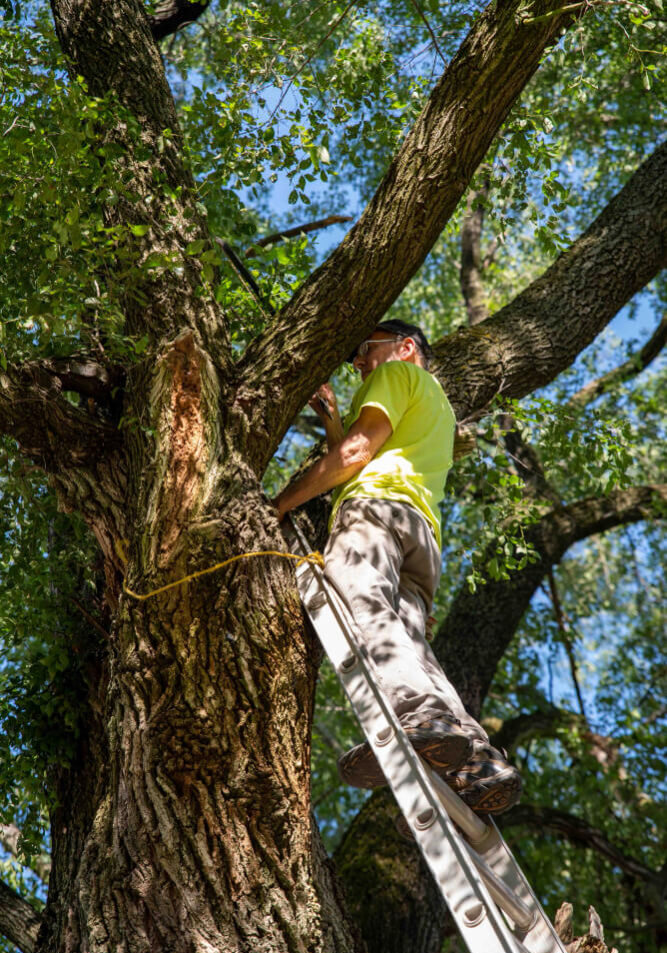
I have seen a perfect pruning job undone by a single wheelbarrow of decorative bark tossed against a cedar siding wall. Wood mulch and shredded rubber both burn. Fire finds them fast under ember fall. Keep the first 1.5 to 2 meters from foundation to landscape in non combustible materials. Crushed gravel, river rock, pavers, and compacted mineral soil all work. Store firewood at least 10 meters away in season, and certainly not under a deck. If you must keep a few starter bundles close, use a steel box with a tight lid and move it out by midsummer.
Outdoor furniture and decor can create ladders too. A wooden bench tucked under a spruce, a fabric shade sail tied to a tree, a stack of pallets near a fence. We sometimes rearrange a patio in the same visit as pruning. Small changes add up.
How slope and wind change the math
On a south facing slope with 15 to 30 percent grade, upslope flame attachment lengthens. Wind breaks that seem fine in calm conditions behave like chimneys under a hot, dry wind. We account for this by increasing vertical clearance and staggering plant clusters rather than lining them up. If a slope faces the prevailing summer wind, we also widen horizontal gaps between shrubs and small trees, aiming for 2 to 3 meters of separation so fire cannot step across in a single leap.
Canyon mouths and ridge tops see gusts that pick up embers from far away. In those exposures, metal mesh on vents, fine screening on under deck lattice, and steel gutter guards complement vegetation work. FireSmart Tree Services integrates these building edge choices into the plan so the property functions as a system, not a collection of chores.
Integrating arborist services with FireSmart goals
Many of the tasks that reduce ladder fuels align with existing arborist offerings. That is good news for property owners because you can fold wildfire resilience into regular care.
Tree Pruning & Crown Shaping manages crown base height and structure. Dangerous Tree Assessment and Removal catches defects before a hot day turns them into debris. Tree Cable and Bracing preserves valuable specimens with risky unions, maintaining shade and aesthetics without increasing fire risk. Stump Removal & Grinding clears woody anchors that collect needles and grass clippings, letting you maintain clean ground. When storms hit or a fire moves through, Emergency Tree Services prioritize hung up limbs, compromised stems, and access routes for response crews.
A Certified Arborist Consultation ties it together. We bring measurement, species knowledge, and local fire behavior experience. We also know when less is more. Not every low branch is a hazard. Not every shrub must go. Judgment saves canopy and budget.
Cost, phasing, and where to start if funds are tight
Few clients can do everything at once, especially on larger lots. Start closest to the structure. The first 1.5 to 2 meters of non combustible space delivers outsized benefit at modest cost. Next, address any deadwood or low limbs on conifers within 10 meters. Then break up continuous shrubs, especially resinous species like juniper against fences or decks. Beyond that, thin crowded saplings beneath mature trees so the next generation grows with higher crown bases naturally.
We often phase projects over two to three seasons. That spreads cost and limits stress on trees. A typical small lot may see a first visit for pruning and debris removal in the spring, a midsummer check to keep grass down and clear gutters, and a fall day to grind any stumps and adjust plantings. Larger rural properties need more time, but the order of operations holds.
Debris handling that does not recreate the problem
Pile a mountain of branches under a pine and you have built a new ladder. We chip on site and either remove chips or place them carefully. In the inner zone near structures, we avoid wood chips. Farther out, a thin chip layer, kept under 5 centimeters and broken by mineral soil, can suppress weeds without carrying fire. Larger logs are either removed or stacked at least 10 meters from the home on bare ground, oriented so air can move through. If local bylaws allow, small, cool prescribed pile burns in wet seasons can reduce volume. Always check permits and burn bans, and never burn where embers can drift into conifers or onto structures.
The role of irrigation and plant health
Well hydrated plants resist ignition better. A drip line that keeps shrubs green without oversaturating trunks helps. On trees, deep, infrequent watering during drought keeps foliage turgid and reduces needle drop. That said, irrigation can create lush fuel if it drives dense, low growth that never gets pruned. The balance is simple. Water for health, prune for clearance.
Mulch for moisture retention belongs outside the inner non combustible zone. Where we do use organic mulch, we keep it thin and interrupted by stone or bare patches. Around tree trunks, a clean, donut shaped ring of mineral soil is better than mulch piled against bark, which invites rot and pests.
Storms, windthrow, and what to inspect after a weather event
High winds create future fire hazards overnight. Broken limbs hang, fibers tear, and trees shed dry material that accumulates around trunks and fences. After a strong wind or heavy snow load, a quick inspection pays off. Look for fresh cracks at branch unions, bark tears, and new leans. If a tree has shifted in the root plate, soil may heave or a new gap opens on the compression side. Those trees often become deadwood within a season and need attention before summer heat.
Emergency Tree Services exist for a reason. Removing a hung limb over a driveway or a cracked leader above a deck is not a DIY task. Rope systems, saw control, and an understanding of load paths make the difference between a safe job and a life changing injury. If you hear creaking or see movement, keep clear and call.
Working with neighbors and the community edge
Fire ignores fences. A clean, pruned yard beside a wall of ladder fuels still faces ember exposure and radiant heat. Where possible, coordinate with neighbors. Shared hedges can be reimagined as spaced clusters with stone between. On community edges, contact local fire agencies to ask about coordinated thinning or chipping days. Neighborhood scale projects reduce ember load for everyone and may qualify for cost sharing programs in some regions.
When cables, thinning, and restraint save a legacy tree
Not every multi stem union spells removal. A centuries old oak with a wide V shape at 4 meters can be preserved with Tree Cable and Bracing that reduces strain during wind events. We combine that structural support with light thinning in the upper crown to reduce sail effect. Keeping that tree while clearing ladders below protects shade and character without amplifying risk. These decisions are custom. We inspect bark inclusions, wood quality, and past growth response, then choose hardware and pruning intensity that support the tree’s biology.
What a full service FireSmart visit looks like
A thorough visit has a rhythm. We begin with a walk and notes. Measurements include crown base heights, distances to structures, and widths of shrub masses. Photos document before conditions. We flag cuts on a few representative trees and confirm with the client. The crew sets up drop zones and rigging points where needed. Pruning proceeds from the inner zone outward, with debris moved to a staging area that does not create new hazards.

Chippers run only after cutting is complete in a given area to reduce foot traffic risk. The ground team rakes fine fuels away from trunks and structures, blows out gutters if part of the scope, and spots any missed deadwood. Stumps from any removals are ground flush or below grade, and soil is backfilled. We finish with a hose down of dust around patios and a final walkthrough to set maintenance intervals.
Maintenance cadence that keeps gains intact
Vegetation does not hold still. Grasses leap back, shrubs push new shoots, and lower limbs try to fill light gaps. I set most clients on a 6 to 12 month cadence depending on growth rates. Spring pruning and cleanup, midsummer grass control and a gutter check, and a fall inspection ahead of winter storms form a reliable pattern. In drought years, we may add a late summer visit to manage accumulated litter.
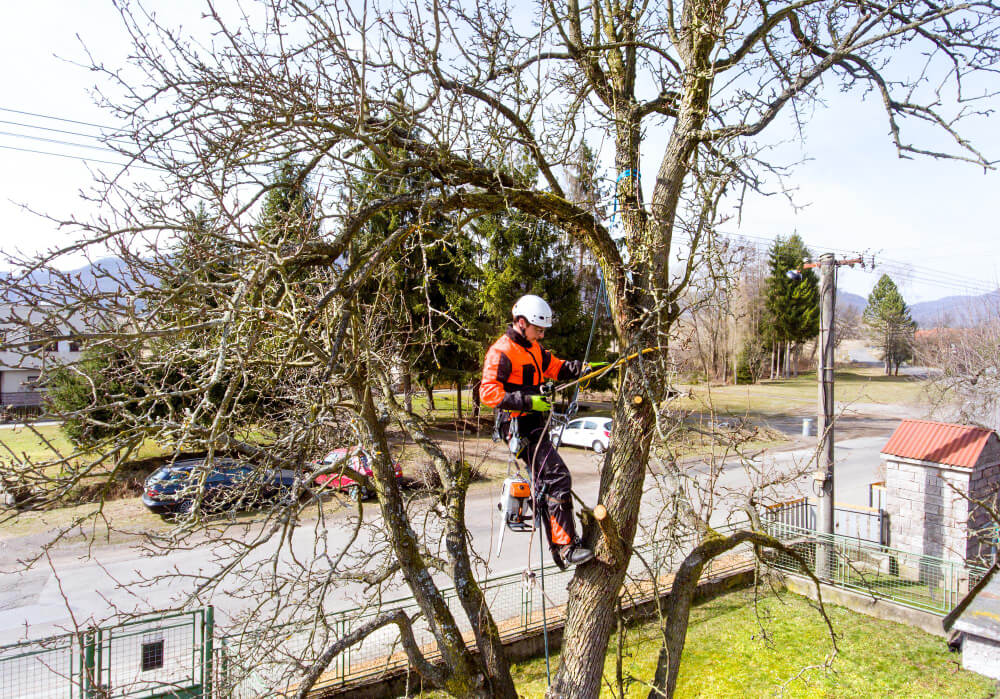
Homeowners who like to be hands on can handle mowing, raking, and basic shrub shaping. Chainsaw work in trees, cuts near power lines, and anything above shoulder height belongs to professionals. The goal is not to keep crews busy for their own sake. It is to keep your property within the thresholds that change fire behavior, season after season.
Regulations, permits, and how we keep work compliant
Many municipalities regulate tree work, especially removals above certain trunk diameters or on steep slopes. Our Certified Arborist Consultation identifies permit triggers early. We prepare simple maps, species lists, and justifications tied to fire resilience and tree health, not vague claims. Where wildlife protections apply, we schedule around closures and document nest checks. If erosion risk exists on slopes, we pair removals with ground stabilization, such as coir logs or native grass seeding, so we do not trade one hazard for another.
Bringing it all together
Ladder fuel reduction is not about stripping a property bare. It is about trimming the rungs that let a small fire climb into a big one, while keeping the trees and shade you value. It marries the precision of arboriculture with the realism of fire behavior. The tools are familiar, from sharp handsaws to thoughtful species choices, yet the intent is specific.
If you are starting from scratch, begin with the inner 2 meters of non combustible space, then raise crowns and break up shrubs within 10 meters. If you are refining an already tidy yard, look for subtle ladders, like a chair under a limb or a new hedge that brushes a trunk. When the work calls for trained hands, lean on Tree Removal Services for unavoidable takedowns, Stump Removal & Grinding to erase snag points, Tree Pruning & Crown Shaping to set heights and structure, and Tree Cable and Bracing to preserve what matters. Use Emergency Tree Services after storms and a Certified Arborist Consultation to knit the pieces into a plan you can maintain.
I have seen homes spared because someone chose to prune three branches and move a mulch ring. I have also seen avoidable losses where a hedge kissed a deck and became a fuse. FireSmart Tree Services exists in that gap, turning small, practical actions into resilience you can count on when the sky turns amber and the wind picks up.
Ace Tree Services Ltd.
Name: Ace Tree Services Ltd.Address: 4656 Wallace Hill Road, Kelowna, BC
Postal code: V1W 4C2
Phone: 250-212-9593
Website: https://acetree.ca/
Hours:
Monday: 7:00 AM - 5:00 PM
Tuesday: 7:00 AM - 5:00 PM
Wednesday: 7:00 AM - 5:00 PM
Thursday: 7:00 AM - 5:00 PM
Friday: 7:00 AM - 5:00 PM
Saturday: 7:00 AM - 5:00 PM
Sunday: Closed
Open-location code (plus code): RHF8+8G Kelowna, British Columbia, Canada
Map/listing URL: https://www.google.com/maps/place/Ace+Tree+Services+Ltd./@49.8232606,-119.4337283,659m/data=!3m2!1e3!4b1!4m6!3m5!1s0x537d8b1d074815c5:0x450b88afa7a41435!8m2!3d49.8232606!4d-119.4337283!16s%2Fg%2F11ydkpnh22
Embed iframe:
"@context": "https://schema.org", "@type": "HomeAndConstructionBusiness", "name": "Ace Tree Services Ltd.", "url": "https://acetree.ca/", "telephone": "250-212-9593", "address": "@type": "PostalAddress", "streetAddress": "4656 Wallace Hill Road", "addressLocality": "Kelowna", "addressRegion": "BC", "addressCountry": "CA" , "openingHoursSpecification": [ "@type": "OpeningHoursSpecification", "dayOfWeek": "https://schema.org/Monday", "opens": "07:00", "closes": "17:00" , "@type": "OpeningHoursSpecification", "dayOfWeek": "https://schema.org/Tuesday", "opens": "07:00", "closes": "17:00" , "@type": "OpeningHoursSpecification", "dayOfWeek": "https://schema.org/Wednesday", "opens": "07:00", "closes": "17:00" , "@type": "OpeningHoursSpecification", "dayOfWeek": "https://schema.org/Thursday", "opens": "07:00", "closes": "17:00" , "@type": "OpeningHoursSpecification", "dayOfWeek": "https://schema.org/Friday", "opens": "07:00", "closes": "17:00" ], "geo": "@type": "GeoCoordinates", "latitude": 49.8232606, "longitude": -119.4337283 , "hasMap": "https://www.google.com/maps/place/Ace+Tree+Services+Ltd./@49.8232606,-119.4337283,659m/data=!3m2!1e3!4b1!4m6!3m5!1s0x537d8b1d074815c5:0x450b88afa7a41435!8m2!3d49.8232606!4d-119.4337283!16s%2Fg%2F11ydkpnh22"
Ace Tree Services Ltd. provides professional tree removal, pruning, stump grinding, emergency response, and arborist consultations for properties in Kelowna and across the Okanagan Valley.
The company works with homes, commercial properties, and municipal settings where tree work needs to be planned carefully around buildings, fences, driveways, landscaping, and other site constraints.
Based in Kelowna, the team is positioned to help nearby neighbourhoods and surrounding Okanagan communities with routine tree care and time-sensitive storm cleanup.
Customers looking for careful tree work often want a crew with certified arborist training, insurance, and a methodical approach to higher-risk removals.
Services also include dangerous tree assessment, cabling and bracing, and wildfire risk reduction tree work for properties that need longer-term planning.
To request a quote or discuss tree care options, call 250-212-9593 or visit https://acetree.ca/.
A public map listing is available to help customers confirm the business location and get directions before a site visit or estimate.
For Kelowna property owners who need pruning, removals, or emergency tree help, a local tree service can make it easier to schedule site-specific recommendations and cleanup.
Popular Questions About Ace Tree Services Ltd.
What services does Ace Tree Services Ltd. provide?Ace Tree Services Ltd. lists tree removal, stump removal and grinding, tree pruning and crown shaping, emergency tree service, arborist consultation, dangerous tree assessment and removal, cabling and bracing, and wildfire risk reduction tree work.
Who does Ace Tree Services Ltd. serve?
The company describes its work as serving homes, businesses, and municipalities in Kelowna and across the Okanagan Valley.
Is emergency tree help available?
Yes. Emergency service is listed for downed or uprooted trees, dangerous tree assessment, stabilization work, and branch cleanup. If a tree is near power lines, the safest first step is to stay clear and contact the utility provider before any tree work begins.
Do I always need a permit to remove a tree?
Not always. Permit requirements can depend on where the tree is located and whether it is near a creek, lake, steep slope, or another protected area. It is best to check local rules for the specific property before removal work starts.
How deep does stump grinding usually go?
Standard stump grinding is typically described as going about 6 to 12 inches below ground level, which is often enough for grass or surface landscaping. Deeper grinding may be possible when site plans call for it.
How much of a tree can be safely removed at one time?
That depends on the species, age, health, and structure of the tree. In practice, good pruning is usually about removing the right limbs for health, clearance, and structure rather than chasing a fixed percentage.
What are common signs that a tree may be dangerous?
Large dead limbs, visible cracks, a new lean, root damage, canopy dieback, or storm-related damage can all be warning signs. Trees near structures deserve extra attention when any of those issues appear.
What is cabling and bracing in tree care?
Cabling and bracing are support systems used to reduce the risk of failure in trees with structural weaknesses that may still be worth preserving. They are generally used to add support, not to replace good assessment and ongoing maintenance.
How do I contact Ace Tree Services Ltd.?
Call 250-212-9593.Website: https://acetree.ca/.
Landmarks Near Kelowna, BC
Downtown KelownaThe downtown core is a practical reference point for lakefront neighbourhoods, mixed-use streets, and central residential properties. If your property is near downtown, tree pruning, removals, and cleanup can be planned around tighter access and nearby structures.
Knox Mountain Park
This well-known park north of downtown is a recognizable landmark for nearby homes and hillside properties. If you are close to this area, ask about tree assessment, trimming, or removal work suited to sloped sites.
Mission Creek Greenway
The greenway runs through several parts of Kelowna and is a useful landmark for nearby residential areas. If your property borders or sits near this corridor, site-specific tree planning is especially important.
Pandosy Village
Pandosy is one of Kelowna’s most recognizable neighbourhoods and a common reference point for south-central properties. If you are nearby, request help for pruning, removals, or storm cleanup around homes and small commercial sites.
Rutland
Rutland is a major east Kelowna neighbourhood with a mix of residential and local commercial properties. If you are located in or near Rutland, tree work can be scheduled for both routine maintenance and urgent situations.
Landmark District
This central business-focused area is a practical landmark for offices, service properties, and nearby residential streets. If your site is near the district, ask about careful tree work around parking, access lanes, and built-up lots.
Kelowna’s North End
The North End sits on the edge of downtown and is a useful reference for nearby homes, industrial sites, and commercial properties. If you are in this part of the city, request tree care based on the layout and constraints of the lot.
Airport District
The Airport District is a recognizable north Kelowna reference point for surrounding properties and access routes. If you are in this area, ask about tree services for residential acreage, commercial sites, or roadside cleanup needs.
Glenmore & Dilworth
These established Kelowna neighbourhoods are useful landmarks for central and north-central service calls. If your property is nearby, pruning and removal work can be tailored to mature trees and established landscapes.
Highway 97 Corridor
Highway 97 is one of the city’s main travel routes and a common way to describe location within Kelowna. If your home or property is just off the corridor, a clear landmark reference can help speed up quote scheduling and site planning.