Hazard Mitigation: Dangerous Tree Assessment and Removal
Trees fail quietly for years, then all at once. A root plate loosens in saturated soil, a seam of decay opens under a wind gust, or a long split that has telegraphed itself for months finally gives way. When a trunk goes, it does not care about schedules, fences, or rooflines. Good hazard mitigation is about noticing early, judging risk honestly, and acting with a plan. The work draws on biology, physics, and old-fashioned craft. It is also personal, because we are often talking about a beloved shade tree that has framed a home for decades.
Why dangerous tree work is different
Plenty of routine tree work, like ornamental pruning, can be booked weeks out and slotted into a calm day. Dangerous tree assessment and removal rarely affords that luxury. The stakes are immediate, and the variables are messy. Each site puts a unique puzzle in front of the crew: compromised wood fibers, lean angles, unknown stress points, overhead services, tight drop zones, and sometimes a homeowner who has already watched a large limb come through a window.
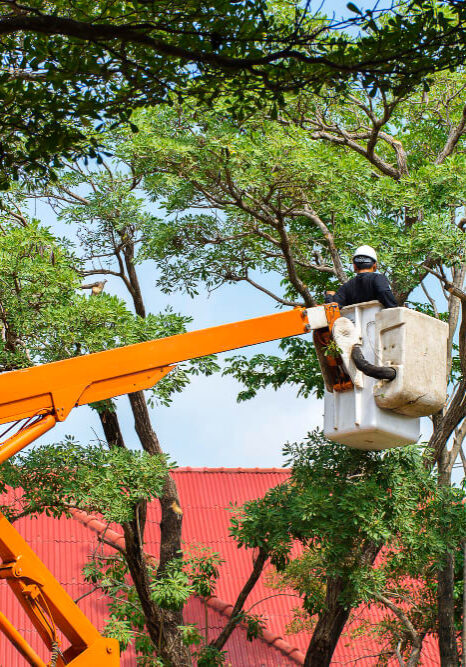
Two truths guide the work. First, the safest time to remove a failing tree is before it fails. Second, some trees that look intimidating are actually stable, and can be retained with targeted care like Tree Pruning & Crown Shaping or Tree Cable and Bracing. Sorting one from the other is the heart of the job, and it starts with a Certified Arborist Consultation rather than a sales pitch.
How trees fail
Failure is a combination of defect, load, and target. Defects include decay pockets, bark inclusions at co-dominant stems, root damage, cracks, and poor structure from past topping. Load means wind, snow, ice, and the sail area of the crown, as well as shock loads during storms. Target is anything that would be damaged if the tree, or part of it, comes down: a house, a driveway often used at certain hours, a swing set, a propane tank.
The failure modes vary:
- Compressive failure at the hinge wood during a storm, often seen as a fresh split along the trunk.
- Shear failure at a weak union where two stems meet with included bark.
- Uprooting, especially after heavy rain on shallow or compacted root systems.
- Limb tear-out at poorly pruned stubs that never sealed properly and decayed.
Patterns appear over a career. River birch, for instance, shed heavy lateral limbs after summer storms more than their appearance suggests. Silver maples with old topping wounds often hide rot chains deep along the leader. Big-leaf poplars rocket upwards and lean toward light, then surprise homeowners when an 80 foot tree decides the last ten degrees of lean will happen in one afternoon. None of this is inevitable when trees are set up with smart maintenance, but once decay progresses or roots are damaged during construction, risk escalates fast.
What a disciplined assessment looks like
A Dangerous Tree Assessment and Removal conversation does not begin with a saw. It begins at the base, moving outward and upward. On a typical Certified Arborist Consultation, I start with the root flare, not the canopy. If the flare is buried under soil or mulch, I clear until the buttress roots show, then probe for soft tissue, cavities, or fungal mats. Girdling roots are common in urban plantings and starve the trunk base of support. If recent trenching or driveway work has cut lateral roots on one side, I make a note, because that asymmetry can be the unseen reason a tree leans after a storm.
From there I map the lean angle and direction in relation to the target. A small lean that has been static for years is less concerning than a new lean with heave in the soil behind the trunk. I scan for longitudinal cracks, ripples in the bark that show fiber buckling, and seams where included bark sits between co-dominant stems. I sound hollow sections with a mallet and, where the case warrants it, use a resistance drill to quantify remaining wall thickness.
In the crown, I am looking for dieback patterns, disproportionate weight on a side limb, or old pruning wounds that never compartmentalized. A bucket or drone helps if line of sight is blocked, but many calls simply require trained eyes on the canopy from two or three angles and a willingness to slow down.
On some visits, sonic tomography or advanced tools earn their keep. They take the guesswork out of ambiguous cases, especially in valuable trees where removal would be a big loss. Other times, the evidence is obvious to anyone who spends five minutes at the trunk.
A homeowner’s quick triage guide
Use the following as a short field check before you call. If one or more apply, book a consult, and treat active storm damage as urgent.
- New lean, especially after rain, with cracks in the soil opposite the lean.
- Large dead limbs over a target, or dead sections high in the crown.
- A seam, deep crack, or bark inclusion at a fork that you can see from the ground.
- Fungal fruiting bodies at the base, or spongy wood when gently probed at the root flare.
- Recent excavation, driveway work, or trenching within the dripline on one side of the tree.
This list does not replace a professional assessment, but it helps separate cosmetic issues from real hazards.
Deciding when to remove and when to retain
Once the defects are documented, risk is described as likelihood times consequence. Several systems exist, from qualitative low to extreme scales, to more granular matrices that consider occupancy patterns beneath the tree. A low likelihood with high consequence can be tolerable if the target is rarely present and the defect is stable. A moderate likelihood over a bedroom that is occupied every night is another matter.
Removal makes sense when:
- Advanced decay has eaten away so much sound wood that reinforcement would not restore capacity.
- A crack or split is actively propagating and extends into the main stem.
- Uprooting is underway on a side facing a primary target.
- The tree’s structure is the product of topping or past damage that cannot be corrected without creating new stress risers.
On the other hand, Tree Pruning & Crown Shaping, in the hands of a qualified crew, can reduce sail area and rebalance loads. Tree Cable and Bracing can hold co-dominant stems together, especially in species known to respond well, like healthy oaks and maples with good wood quality. Soil care, including decompaction, mulching, and addressing poor drainage, can improve root performance in marginal cases. Hazard mitigation is not a binary choice between leave and remove. It is a sequence: reduce risk, monitor, and remove only when the line is crossed.
Planning a safe removal
If removal is the call, planning is the difference between a clean day’s work and a dangerous one. The site gets walked twice. First for macro issues, like overhead wires, septic fields, and narrow access. Second with an eye to rigging points, potential shock loads, and escape routes. A removal plan will identify:
- Whether the tree can be safely felled in one piece, or must be dismantled in sections.
- Anchor trees or the need for a portable anchor if the subject tree is too compromised to rig off.
- The hardware mix, from blocks and slings to a high line, tag lines, and friction devices.
- Whether a crane or spider lift is warranted, given limb architecture and access.
Felling in one piece requires a reliable hinge and predictable fiber behavior. Decay erodes that predictability. With advanced rot, the hinge may crumble under load, making directional felling risky. That pushes a crew toward sectional removal, often from the top down, keeping sections small to limit dynamic forces on compromised wood.
In tight backyards, ground protection mats spare lawns and irrigation systems. A staging plan keeps brush and logs moving so the work area stays clean. Good crews talk through cut order out loud so everyone knows where tension will shift as each limb is removed.
Tools and techniques that matter
Modern gear has made tree work safer, but it is still a trade where judgment earns its keep. A few examples:
- A rigging block high in an adjacent anchor tree creates a cleaner rope angle and reduces side loading on the subject tree. That simple decision can prevent a catastrophic split.
- Friction devices on the base let the ground crew manage heavy pieces smoothly. Without controlled friction, a big piece can free fall into the system and shock load brittle wood.
- A holdfast or deadman anchor expands options in treeless yards. It keeps tag lines safe and effective where no natural anchors exist.
- A chainsaw with a narrow kerf bar is helpful for precision in brittle hinge wood, while wedges and a jack help establish the desired bias without expanding a crack.
Personal protective equipment is non-negotiable. Helmets with muffs and visors, chainsaw pants, proper footwear, and reliable communication between climber and ground keep small mistakes from becoming big ones.
Working near utilities and public rights of way
Where power lines are involved, the rules change. Homeowners often underestimate the clearance required and the risks of induction, not just direct contact. In many jurisdictions, only line-clearance qualified arborists can work within a defined distance of energized conductors. Coordination with the utility may include a temporary shutdown or a service drop. It takes time to schedule, so emergency tree services triage starts with a phone call to the power company when lines are compromised.
Sidewalks and roads also trigger local rules. Traffic control plans, cones, and flaggers might be required even for a day job. Good Tree Removal Services bake those logistics into the plan so the crew can focus on the tree, not a car rolling through the drop zone.
The stump is part of the job
Once the canopy and trunk are gone, the stump remains. Some clients think they can live with it, and a few do. More often, stumps kill mower blades, regrow shoots, or become tripping hazards. Stump Removal & Grinding addresses the problem at the source. Typical grinding depths range from 6 to 12 inches below grade, deeper when the species is prone to vigorous suckering. In tight sites, a narrow access grinder can pass through a 36 inch gate. Chips are raked level or hauled away, and the cavity is backfilled with topsoil if replanting or turf is planned. It is reasonable to ask that the quote spell out the grinding depth, chip haul-off, and topsoil backfill so expectations are clear.
Debris, disposal, and site restoration
Brush, wood, and chips can be assets if handled right. Hardwoods like maple and oak become firewood with a little time and space to season. Chips make excellent mulch when spread 2 to 4 inches deep, kept off the trunk flare of remaining trees. Many clients ask for a partial haul, leaving the straight trunk sections and taking the tangle of brush. That saves money and time, and it keeps the yard usable.
After heavy equipment or a crane, ruts and compaction need attention. A light pass with a decompaction tool and fresh topsoil in tracks goes a long way. In sensitive landscapes, plywood or composite mats prevent most damage in the first place. It is one of those quiet details that marks a professional crew.
FireSmart thinking at the property scale
In fire-prone regions, FireSmart Tree Services add a layer of strategy beyond individual tree risk. The home ignition zone matters. Think in bands. Zero to five feet from the structure should be non-combustible: gravel, concrete, or well-irrigated, low-fuel plantings. Five to 30 feet is the lean, clean, and green zone, where Tree Pruning & Crown Shaping reduces ladder fuels and spacing breaks up continuous crowns. Thirty to 100 feet, or farther on slopes and in heavy fuels, is the area for thinning, limbing up, and managing surface fuels.
Hazard trees that lean toward the home, or that hang dead limbs over the roof, get priority even if they seem modest. During a wildfire, embers exploit small weaknesses. A limb over a vent, a dead juniper beneath a window, or bark mulch against a deck can make the difference between a close call and a loss. FireSmart is not about clear-cutting a yard. It is about selective removals, structural pruning, and steady maintenance that keeps fuels discontinuous.
Emergencies, triage, and what to do first
Storm damage creates chaos. Split stems dangle on fiber strands, fences bow under loads they were never designed to carry, and adrenaline tempts people onto ladders. Resist that urge. A downed limb on a roof can appear stable and then swing when a small cut releases a bind. Rope angles, wood tension, and gravity interact in ways that are hard to predict from the ground.
If you are dealing with an active emergency, here is a focused sequence that keeps people safe while help is on the way:
- Keep people and pets out of the drop zone, and do not park vehicles beneath the damaged tree.
- Treat any line in the tree or on the ground as energized, and call the utility first, then call for Emergency Tree Services.
- If the limb is resting on a roof, do not cut from underneath. Avoid placing weight beneath the load path, including in the rooms directly under it.
- Take clear photos from a safe distance and note address access points for the crew.
- If water is entering the home, place buckets and move valuables, but do not risk injury for tarping until professionals de-tension the limb.
Good emergency crews stabilize first, then remove. That might mean a quick cable install to hold a split, or a tag line to steer a swinging piece away from a window before cutting.
Costs, timelines, and what drives them
People ask for a price before we see the tree. Fair question, impossible to answer with precision sight unseen. A small ornamental removal with great access might run a few hundred dollars. A compromised 90 foot cottonwood over a garage with power lines nearby can be ten times that, especially if a crane, night work, or utility coordination is required. The biggest factors are access, complexity, risk to targets, and disposal volume. Stump Removal & Grinding is usually a separate line item. If a quote seems too low, look for what is missing: traffic control, utility coordination, thorough cleanup, or proper insurance coverage.
Season also matters. In storm season, Emergency Tree Services can be backed up, and overtime rates apply. If your situation is urgent but not life safety, ask whether a two-stage plan makes sense. Often, removing the immediate hazard limb quickly and scheduling the full removal later balances safety and cost.
Alternatives that buy time or solve the problem
Not every risky tree needs to go. Prudent maintenance can make a striking difference, particularly when combined with monitoring.
Crown reduction, done well, reduces sail and moves the lever arm inward. The cuts are targeted about to lateral branches that are at least one third the diameter of the removed portion. This avoids weak sprouts and helps the tree compartmentalize naturally. Avoid “lion-tailing,” where interior foliage is stripped, leaving heavy tips that catch wind and load up unions.
Cabling joins co-dominant stems and shares load. Static steel systems are common when movement is not desired, while dynamic systems allow a bit of sway and reduce shock loads. Installation height matters. Cables set near two thirds the stem height are more effective than low installs, and proper termination on sound wood is vital. Bracing rods can stop a crack from propagating further down a union.
Soil and root care often get overlooked. Aerated compost tea will not cure structural decay, but decompaction, fresh mulch, and irrigation adjustments can improve the vigor of a borderline tree. Better vigor means better compartmentalization around minor wounds and less dieback that could become a hazard later.
Monitoring is a strategy. A high-risk rating today does not always mean a removal tomorrow. On a few trees we have installed a cable, performed crown reduction, and set a two-year inspection interval. Ten years later, those trees are still standing and safer than when we started.
Case notes from the field
Early summer, we were called to a backyard with a large red oak leaning over a playhouse. The homeowner had noticed mushrooms at the base and a new crack near a fork. Sounding with a mallet revealed a hollow thump around one third of the circumference. A resistance drill indicated only two inches of sound wall on the tension side of the lean. Removal was the right call.
Access was tight. We set a high rigging point in a healthy maple one yard over, installed a redirect, and worked small. The split union wanted to peel when loaded, so we pre-tied the two leaders with a static cable to stop any widening during cuts. Sections were lowered with a base friction device so the decayed hinge would not take a shock. Once the mass was gone, we cut the stump flush and scheduled Stump Removal & Grinding the following week to avoid rutting the damp lawn.
Different day, different outcome. A mature sugar maple at the corner of a driveway had a pronounced bark inclusion at a twin stem union, but the wood was sound and there was no excavation history or fungi. We installed a dynamic cable at the right height, pruned to reduce sail on the heavier limb, and set a three year inspection plan. That tree casts perfect afternoon shade on the porch, and it will do so safely for many years.
Choosing the right partner
Hazard mitigation is not purely technical. You are inviting a crew into your space to make permanent changes to a living structure. A few traits separate excellent Tree Removal Services from the rest:
- They listen first and explain their reasoning, including trade-offs.
- Their quotes name specifics: pruning objectives, cable type and placement, stump grinding depth, chip haul-off, and site protection.
- They carry proper insurance and can show it on request.
- They know when to say no, especially around energized lines or unstable trees that require a crane.
A solid outfit offers the full spectrum, from Certified Arborist Consultation to Emergency Tree Services, and can move fluidly among Tree Pruning & Crown Shaping, Tree Cable and Bracing, and removals. They treat FireSmart Tree Services as a long game, not a one-time cleanup, and they keep your property’s character front and center.
After removal, what next
Removing a tree changes light, wind, and soil moisture. Lawns sunburn, surviving trees grow faster, and storm winds https://jaidenksnc151.trexgame.net/rapid-mobilization-emergency-tree-services-team find new paths. Plan for it. If the removed tree was a keystone shade provider, consider a replacement species that fits the site and the future, not just the present. Scale matters. A tree that matures at 40 to 50 feet is often a better neighbor to a house than a giant that wants 80 plus.
Prepare the planting hole with a wide, shallow excavation rather than a deep one, set the root flare at grade, and water deeply but infrequently to promote roots that seek depth. Mulch two to three inches deep, pulled back from the trunk. Schedule the first structural pruning at year three to set good form early.
The judgment call
When I stand at a trunk that someone loves, I do not get to hide behind a formula. Numbers and tools help, but judgment ties it together. I weigh the defect, imagine the load, picture the target, and see the night in February when wind pushes from the northwest at 40 miles per hour. I consider the homeowner’s tolerance for risk, the value of the tree, and the very real costs of removal. Sometimes I argue for retention with careful work and a plan to monitor. Other times I say, it is time to let it go.
Dangerous Tree Assessment and Removal is not about fear, it is about stewardship. Done well, it keeps families safe, preserves good trees, and removes the ones that threaten what matters. The right combination of Tree Removal Services, Tree Pruning & Crown Shaping, Tree Cable and Bracing, and practical FireSmart Tree Services gives a property resilience. When emergencies come, a calm call for Emergency Tree Services brings experienced hands who have solved these puzzles many times. That is how a yard becomes not just beautiful, but secure.
Ace Tree Services Ltd.
Name: Ace Tree Services Ltd.Address: 4656 Wallace Hill Road, Kelowna, BC
Postal code: V1W 4C2
Phone: 250-212-9593
Website: https://acetree.ca/
Hours:
Monday: 7:00 AM - 5:00 PM
Tuesday: 7:00 AM - 5:00 PM
Wednesday: 7:00 AM - 5:00 PM
Thursday: 7:00 AM - 5:00 PM
Friday: 7:00 AM - 5:00 PM
Saturday: 7:00 AM - 5:00 PM
Sunday: Closed
Open-location code (plus code): RHF8+8G Kelowna, British Columbia, Canada
Map/listing URL: https://www.google.com/maps/place/Ace+Tree+Services+Ltd./@49.8232606,-119.4337283,659m/data=!3m2!1e3!4b1!4m6!3m5!1s0x537d8b1d074815c5:0x450b88afa7a41435!8m2!3d49.8232606!4d-119.4337283!16s%2Fg%2F11ydkpnh22
Embed iframe:
"@context": "https://schema.org", "@type": "HomeAndConstructionBusiness", "name": "Ace Tree Services Ltd.", "url": "https://acetree.ca/", "telephone": "250-212-9593", "address": "@type": "PostalAddress", "streetAddress": "4656 Wallace Hill Road", "addressLocality": "Kelowna", "addressRegion": "BC", "addressCountry": "CA" , "openingHoursSpecification": [ "@type": "OpeningHoursSpecification", "dayOfWeek": "https://schema.org/Monday", "opens": "07:00", "closes": "17:00" , "@type": "OpeningHoursSpecification", "dayOfWeek": "https://schema.org/Tuesday", "opens": "07:00", "closes": "17:00" , "@type": "OpeningHoursSpecification", "dayOfWeek": "https://schema.org/Wednesday", "opens": "07:00", "closes": "17:00" , "@type": "OpeningHoursSpecification", "dayOfWeek": "https://schema.org/Thursday", "opens": "07:00", "closes": "17:00" , "@type": "OpeningHoursSpecification", "dayOfWeek": "https://schema.org/Friday", "opens": "07:00", "closes": "17:00" ], "geo": "@type": "GeoCoordinates", "latitude": 49.8232606, "longitude": -119.4337283 , "hasMap": "https://www.google.com/maps/place/Ace+Tree+Services+Ltd./@49.8232606,-119.4337283,659m/data=!3m2!1e3!4b1!4m6!3m5!1s0x537d8b1d074815c5:0x450b88afa7a41435!8m2!3d49.8232606!4d-119.4337283!16s%2Fg%2F11ydkpnh22"
Ace Tree Services Ltd. provides professional tree removal, pruning, stump grinding, emergency response, and arborist consultations for properties in Kelowna and across the Okanagan Valley.
The company works with homes, commercial properties, and municipal settings where tree work needs to be planned carefully around buildings, fences, driveways, landscaping, and other site constraints.
Based in Kelowna, the team is positioned to help nearby neighbourhoods and surrounding Okanagan communities with routine tree care and time-sensitive storm cleanup.
Customers looking for careful tree work often want a crew with certified arborist training, insurance, and a methodical approach to higher-risk removals.
Services also include dangerous tree assessment, cabling and bracing, and wildfire risk reduction tree work for properties that need longer-term planning.
To request a quote or discuss tree care options, call 250-212-9593 or visit https://acetree.ca/.
A public map listing is available to help customers confirm the business location and get directions before a site visit or estimate.
For Kelowna property owners who need pruning, removals, or emergency tree help, a local tree service can make it easier to schedule site-specific recommendations and cleanup.
Popular Questions About Ace Tree Services Ltd.
What services does Ace Tree Services Ltd. provide?Ace Tree Services Ltd. lists tree removal, stump removal and grinding, tree pruning and crown shaping, emergency tree service, arborist consultation, dangerous tree assessment and removal, cabling and bracing, and wildfire risk reduction tree work.
Who does Ace Tree Services Ltd. serve?
The company describes its work as serving homes, businesses, and municipalities in Kelowna and across the Okanagan Valley.
Is emergency tree help available?
Yes. Emergency service is listed for downed or uprooted trees, dangerous tree assessment, stabilization work, and branch cleanup. If a tree is near power lines, the safest first step is to stay clear and contact the utility provider before any tree work begins.
Do I always need a permit to remove a tree?
Not always. Permit requirements can depend on where the tree is located and whether it is near a creek, lake, steep slope, or another protected area. It is best to check local rules for the specific property before removal work starts.
How deep does stump grinding usually go?
Standard stump grinding is typically described as going about 6 to 12 inches below ground level, which is often enough for grass or surface landscaping. Deeper grinding may be possible when site plans call for it.
How much of a tree can be safely removed at one time?
That depends on the species, age, health, and structure of the tree. In practice, good pruning is usually about removing the right limbs for health, clearance, and structure rather than chasing a fixed percentage.
What are common signs that a tree may be dangerous?
Large dead limbs, visible cracks, a new lean, root damage, canopy dieback, or storm-related damage can all be warning signs. Trees near structures deserve extra attention when any of those issues appear.
What is cabling and bracing in tree care?
Cabling and bracing are support systems used to reduce the risk of failure in trees with structural weaknesses that may still be worth preserving. They are generally used to add support, not to replace good assessment and ongoing maintenance.
How do I contact Ace Tree Services Ltd.?
Call 250-212-9593.Website: https://acetree.ca/.
Landmarks Near Kelowna, BC
Downtown KelownaThe downtown core is a practical reference point for lakefront neighbourhoods, mixed-use streets, and central residential properties. If your property is near downtown, tree pruning, removals, and cleanup can be planned around tighter access and nearby structures.
Knox Mountain Park
This well-known park north of downtown is a recognizable landmark for nearby homes and hillside properties. If you are close to this area, ask about tree assessment, trimming, or removal work suited to sloped sites.
Mission Creek Greenway
The greenway runs through several parts of Kelowna and is a useful landmark for nearby residential areas. If your property borders or sits near this corridor, site-specific tree planning is especially important.
Pandosy Village
Pandosy is one of Kelowna’s most recognizable neighbourhoods and a common reference point for south-central properties. If you are nearby, request help for pruning, removals, or storm cleanup around homes and small commercial sites.
Rutland
Rutland is a major east Kelowna neighbourhood with a mix of residential and local commercial properties. If you are located in or near Rutland, tree work can be scheduled for both routine maintenance and urgent situations.
Landmark District
This central business-focused area is a practical landmark for offices, service properties, and nearby residential streets. If your site is near the district, ask about careful tree work around parking, access lanes, and built-up lots.
Kelowna’s North End
The North End sits on the edge of downtown and is a useful reference for nearby homes, industrial sites, and commercial properties. If you are in this part of the city, request tree care based on the layout and constraints of the lot.
Airport District
The Airport District is a recognizable north Kelowna reference point for surrounding properties and access routes. If you are in this area, ask about tree services for residential acreage, commercial sites, or roadside cleanup needs.
Glenmore & Dilworth
These established Kelowna neighbourhoods are useful landmarks for central and north-central service calls. If your property is nearby, pruning and removal work can be tailored to mature trees and established landscapes.
Highway 97 Corridor
Highway 97 is one of the city’s main travel routes and a common way to describe location within Kelowna. If your home or property is just off the corridor, a clear landmark reference can help speed up quote scheduling and site planning.