Insurance-Approved Tree Removal Services and Documentation
Storms and saturated ground do not ask permission. When a trunk twists or a root plate lets go, a lot happens fast. People often call in a panic, because a maple is leaning over a bedroom or a spruce is already on the garage. In those moments, the work is as much about protecting life and property as it is about getting your claim approved. An insurance-approved tree removal is not a different cut, it is a different level of documentation, coordination, and risk management layered onto work that is already technical and hazardous.
I have worked hundreds of claims across wind events, heavy snow, and summer microbursts. The pattern repeats: a frightened homeowner, an overworked adjuster, utilities pulled in three directions, and a site that changes minute by minute as fibers rupture and loads shift. The crews that do this well blend field skill with administrative discipline. That is the heart of getting paid by the carrier without headaches later.
What “insurance-approved” actually means
Insurers are not endorsing a contractor so much as accepting that the contractor’s scope, safety plan, and pricing format match their standards. An insurance-approved tree removal usually ticks these boxes:
- The work addresses a covered loss, and the scope focuses on reasonable and necessary measures to mitigate further damage.
- The arborist is qualified to assess and act on dangerous conditions, with credentials that stand up in a file audit. An ISA Certified Arborist or a TRAQ qualified assessor often carries the weight an adjuster needs.
- Invoices and estimates are itemized in a way that aligns with claim systems. Many carriers prefer breakdowns by labor, equipment, mobilization, disposal, stump work, and site protection, with photos tied to each line.
- Safety, permits, and utility coordination are built into the plan. A job over a live service line, for example, should document the utility’s stand-by or de-energization.
- The file includes proof of liability coverage and workers’ compensation for the tree contractor. Carriers do not want exposure to uninsured operators.
None of this replaces good field judgment. It adds a paper trail that lets the adjuster justify payment to a supervisor who was not on site.
The first hours after a storm: stabilize, then remove
When a tree hits a roof or blocks a critical entrance, the mission shifts from routine Tree Removal Services to emergency stabilization. In insurance terms, this is mitigation. The idea is to stop active damage and make the area safe so the property can be secured and assessed.
In practice, stabilization can mean cribbing a stem that is crushing rafters, relieving load with a controlled piecemeal takedown, or even leaving the trunk in place while you cut and lower canopy to reduce leverage. Emergency Tree Services often run in twilight or early dark, so lighting, spotters, and radio comms matter. Slow is smooth when a leaner carries too much stored energy.
Adjusters do not need prose at midnight. They need a quick call or email with three points: what you found, what you did to prevent more damage, and what is next. A short write-up with timestamped photos within 24 hours sets a cooperative tone and keeps later disputes off the table.
How arborists evaluate dangerous trees for insurance files
A Dangerous Tree Assessment and Removal is not just a gut check. It is an evidence-based read of defects, loads, and targets, translated into a recommendation that a non-arborist can understand. Here is what we document when filing with a carrier.
We identify defects with plain language and, where needed, simple diagrams. A spiral crack on a cottonwood is different from a long vertical shear in a red oak. We note diameter at breast height, lean angle, canopy weight distribution, and decay indicators like fruiting bodies or a hollow sound under mallet taps. If there is a sudden change in crown color or leaf wilt after a wind event, we flag possible root plate movement or girdling.
Targets matter. A compromised tree 60 feet from a shed is a lower priority than one that is rooted ten feet from a chimney. We draw the drop zone, the potential impact area, and any secondary hazards like propane tanks, glass sunrooms, or pools.
We factor access and equipment needs. A 32-inch DBH with no driveway access might require a spider lift through a side yard, or full rope rigging with friction devices and multiple redirects to protect turf and patios. If a crane is necessary, we show the crane pad location, outrigger loads, and ground protection plan.
We state urgency. A tree with advanced root decay leaning toward a structure is not a wait-and-see situation. We assign a timeframe for action, often in hours, sometimes in days, and explain the risk of delay.
A Certified Arborist Consultation adds credibility here. Many insurers now look for TRAQ language on likelihood of failure and consequences, especially when approving crane work or street closures.
Power lines, utilities, and when to call for a standby
Nothing derails a claim faster than a contractor cutting near energized conductors without coordination. If the canopy is touching primaries, we contact the utility for a line drop or a safety standby. Each region has its own process. We build time for this into the estimate, and we keep emails or ticket numbers for the file.
For secondary service lines to the house, rules vary. In some areas, we can rig around insulated secondaries with appropriate clearances. In others, a temporary disconnect is the only responsible path. When a trunk has torn the service mast from a wall, you will likely need both an electrician and the utility before we cut. We loop the adjuster in early so no one is surprised by a half day of waiting on a bucket truck.
Gas lines, septic lids, and irrigation mains also matter. A quick locate before we set outrigger pads or trench grind saves both property and arguments later.
Methods that keep claims clean: cranes, rigging, and protection
Most insurance tree removals occur on difficult sites. The tree is too compromised to be climbed safely, yet there is no direct access for a bucket. This is where cranes earn their keep. We work with operators who can place a jib thread-the-needle style between dormers, lift a 700-pound top without shocking the structure, and set pieces exactly where we need them. We document crane setup, lift plans, and communication protocols. The adjuster seeing that plan reads, this is controlled risk, not chaos.
Rigging still matters. On homes with fragile roofing, we build catch systems with high-modulus lines and friction devices to keep impact loads low. We protect the yard with timbers or mats from the street to the work zone, and we take wide shots before and after so the adjuster can confirm we did not trade one damage for another.
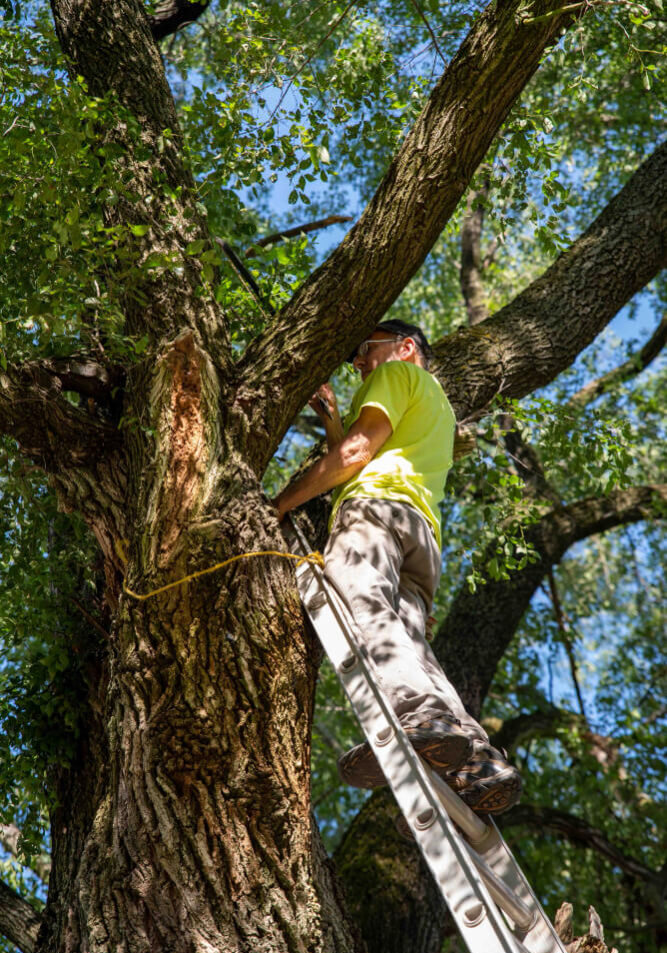
Sometimes, the best method is to leave a safe stump overnight and come back after tarping and structural shoring. A clean edge on a cut makes the roofer’s job easier, and it photographs well for the file.
What counts as reasonable and necessary
Insurance rarely pays to remove a healthy tree for peace of mind. They pay to remove debris from a covered structure, make the site safe, and, in many policies, to take down trees that are an imminent threat because of a covered event. Nuances matter:
- If a tree falls in the yard and misses everything, many policies limit payment to a small debris removal allowance, often 500 to 1,000 dollars per tree, with an overall cap. We tell clients this up front so expectations fit the policy reality.
- If any part of the tree hits a covered structure or blocks a driveway needed for emergency access, coverage typically opens up. We photograph contact points and obstructions and note why they matter for safety.
- If decay or neglect is the primary cause and no covered peril is involved, the insurer may deny the removal and pay only for secondary damage. We can still do the work, but we keep scopes separate so a denial does not taint the entire invoice.
Telling the truth in clear language helps. Guessing or stretching puts the homeowner in a bind when an inside examiner reviews the file.
Stump Removal & Grinding, and when it belongs in the claim
Stump work creates more confusion than any other line. Many carriers treat stump grinding as part of debris removal when the stump is within a fall zone that impacted the structure, or when the stump interferes with necessary repairs like foundation access or fence rebuild. Others consider it elective.
We explain why stump removal is reasonable. If roots lifted a walkway, the stump needs to go so concrete can be re-poured. If the stump sits in a crane mat path for a subsequent roofing project, grinding early saves time and money. We record grinding depth, typically 8 to 12 inches for turf, deeper near hardscape. We include utility locates when required. A simple plan for chip haul-off or mulch spread helps an adjuster visualize the outcome.
Tree Pruning & Crown Shaping as mitigation, not add-ons
After a wind event, the neighbor’s oak may be half broken, with a long lateral overhanging your roof. If the insurer covered your removal but declines to pay for pruning the neighbor’s tree, consider strategic Tree Pruning & Crown Shaping out of pocket. A thoughtful reduction can lower sail area and remove damaged wood. We keep this work on a separate estimate and include a note that it reduces future risk. Some adjusters will approve limited pruning if it directly affects the covered structure. Many will not. Clear separation keeps the claim tidy.
Tree Cable and Bracing, when to recommend and how to document
Cabling and bracing can salvage a mature specimen that split at a union but still retains good structural wood. For insurance, the question is whether the need ties back to a covered peril and serves immediate risk reduction. If we install a static cable system to secure a cracked codominant leader over a garage damaged in the same event, we have a case. We document:
- Species, age class, and approximate height.
- Location and diameter of the union.
- Hardware specifications and load expectations.
- Follow-up inspection schedule.
If cabling is purely elective or part of long-term stewardship, it usually sits outside the claim. We say that plainly and let the owner decide.
FireSmart Tree Services for wildfire zones
In the West and other fire-prone regions, carriers increasingly ask for evidence of defensible space. FireSmart Tree Services align neatly with this. We reduce ladder fuels, create spacing between crowns, and prune lower branches to raise crown height. We also address wood piles against walls, fence attachments, and cedar hedges that act like fuses.
Insurers sometimes provide credits or even grants for mitigation done to specific standards within a set radius of structures. We measure distances, photograph before and after, and note compliance with local FireSmart or FireWise guidelines. While wildfire claims differ from storm claims, the discipline of documenting purpose-built risk reduction remains the same.
The paperwork insurers actually look for
Good photos are table stakes. What separates paid files from ping-pong disputes is organized, claim-literate documentation. Here is a concise checklist of what adjusters usually want to see:
- A signed, itemized estimate that identifies labor, equipment, mobilization, disposal, and any Stump Removal & Grinding or pruning that is part of the loss.
- A brief Dangerous Tree Assessment on company letterhead, ideally by a Certified Arborist, stating defects, targets, and urgency.
- Time-stamped photos that show context wide, then detail close, including contact points with structures, utilities, and protection measures.
- Permit records or utility coordination notes, with ticket numbers or emails, when applicable.
- A final invoice that matches the estimate’s structure, with notes on variances and supporting photos.
If a carrier uses a pricing system like Xactimate, we mirror their line naming where possible. When we deviate because real world tree work does not fit software, we explain the why with a sentence or two.
Estimating that stands up under scrutiny
The cost of a removal depends on the tree’s size, condition, and location. We price by risk, time, and equipment, not just by diameter. For claim files, we build the logic into the estimate. A 70-foot fir with root plate heave, perched over a living room, requires a different setup than a healthy ash over turf with a straight fall line.
We include mobilization explicitly on storm clusters. Crews bounce between jobs waiting on utilities. Cranes burn fuel idling. We set half-day or full-day minimums for specialized equipment and state them up front.
Disposal is heavier than people think. A green hardwood log can weigh 60 to 70 pounds per cubic foot. On a 30-inch DBH oak, it does not take many cuts to fill a truck. Tipping fees vary by site and city. We attach disposal receipts when practical, or at least note the yard or mill used.
We call out site protection as a line item, not a free courtesy. Mats, plywood, and turf repair cost money. Adjusters know this, and it helps them justify the total.
Permits, neighbors, and trees you do not own
Storm work sometimes lands on property lines. If a neighbor’s tree fell across a fence and onto your shed, the tree still belongs to the neighbor in most jurisdictions. Your insurer may cover removal from the covered structure on your side, but you cannot authorize work on the remaining trunk in the neighbor’s yard without their consent. We communicate this delicate dance early, offer to coordinate, and keep separate estimates for each party.
City trees on boulevards or heritage-listed specimens require permits even after storms. Municipal crews may clear the right of way first and expect your contractor to handle the rest. We check local rules before we cut, and we keep permits or exemption letters in the file.
Wildlife and seasonal constraints
Nesting seasons change the plan. In many regions, active nests of protected birds cannot be disturbed except under emergency safety exceptions. Bats in cavity trees create even tighter constraints. If a tree is still standing but unsafe in the long term, we may mitigate immediate risk by reducing mass away from targets, then return after fledging. We document any biologist consultations or regional guidelines we followed so the claim shows compliance.
Bringing order to emergency scenes
On complex jobs, we assign a site lead who talks to the homeowner and the adjuster while the crew works. That person makes sure we collect the small details that often go missing: the bent gutter downspout we straightened, the skylight we covered with a temporary shield, the garden sculpture we moved to avoid damage. These touches do two things. They prevent needless friction later, and they tell the story that we were careful, not just fast.
I still remember a microburst that toppled four spruces into a cul-de-sac, each touching a different roof. The power company was overwhelmed. We set cribbing under one trunk to stop further wall movement, cut canopy to reduce leverage, and left the main stems until a bucket crew could de-energize the span. By supper the next day, all four roofs were patched, and the adjusters had real-time photos and a clean ledger of hours, equipment, and debris loads. Those files paid quickly because they made sense.
How to choose a contractor the insurer will trust
Credentials matter, but references and behavior under pressure matter more. Look for an outfit that can show ISA Certified Arborist credentials and, ideally, Tree Risk Assessment Qualification for whoever writes your assessment. Check for proof of insurance and active workers’ compensation coverage. Ask about their experience with carriers, not in generalities but in the mechanics: do they provide itemized estimates, handle utility coordination, and photograph their protection measures.
If a price is far lower than others, ask what is missing. It is often disposal, protection, or time for utilities. If you later add those in under pressure, the cheap price is no longer cheap, and the claim file becomes messy.
Preventive work that pays for itself
Most storm claims I see could have been smaller with modest preventive maintenance. Regular Tree Pruning & Crown Shaping reduces leverage in common failure points, especially on co-dominant leaders. Deadwood removal stops widowmakers from punching holes in roofs. Root zone care prevents decline that turns wind gusts into failures.
Cabling is not a cure-all, but on valuable multi-stem trees it can buy decades when installed and inspected correctly. FireSmart Tree Services reduce loss severity in predictable ways. Carriers sometimes ask for evidence of this work after paying a claim. A clean maintenance file can reflect well on a homeowner when renewals come up.
A simple path from first call to closed claim
When people are anxious, a clear, finite sequence helps. The steps below reflect a process we use across most insured removals:
- Site stabilization and safety: We secure hazards, protect the structure, and prevent further damage, with quick photos and a same-day note to the adjuster.
- Assessment and scope: A Certified Arborist Consultation documents defects, targets, and urgency, and we draft an itemized estimate aligned with the claim.
- Coordination and permits: We schedule utilities, obtain permits if needed, and plan equipment access and protection. We keep ticket numbers and approvals in the file.
- Removal and mitigation: We execute the plan with rigging or crane as required, capture mid-job photos, and separate elective work from covered items.
- Closeout and documentation: We grind stumps or schedule later if approved, restore protection areas, and submit a final invoice with before, during, and after photos, plus any disposal receipts.
This rhythm reduces surprises and gives the adjuster a storyboard that can be defended internally.
Edge cases and judgment calls
Not every decision is simple, and honest conversations save time. A hollow trunk that still stands may be safer to remove later in daylight rather than at 3 a.m. In heavy wind. A crane setup on saturated turf may cause more damage than a technical rigging approach, even if rigging takes longer. If shingles are already compromised, we may forgo rope protection in favor of rapid canopy reduction to stop active leaks. We explain these calls in a sentence or two in the file.
Coverage has gray zones. Debris that blocks a required egress route may be covered, while the same debris five feet to the side may not. Adjusters vary. When in doubt, we price optional lines and mark them as such. Clear labeling prevents the dreaded across-the-board haircut on a fair invoice.
What homeowners can do before the crew arrives
A little preparation goes a long way. Photograph the damage from safe positions. Shut off water if a broken limb breached a line. Move cars, if you can do so safely, to give the crew access. Keep pets inside. If power lines are involved, stay back and wait. Call your carrier and get a claim number. With that in hand, we can reference the file in our first note and save the adjuster time.
If you have previous tree work records, share them. They help us, and they often help the claim. Showing that you maintain your trees undercuts arguments about neglect.
When stump chips settle and the last photo is sent
Weeks after the rush, we often get one last call. The chip pile from Stump Removal & Grinding settled, leaving a slight depression. We https://remingtonoqrr904.theglensecret.com/wildfire-readiness-firesmart-tree-services-explained plan for this and either return to top off or explain how to rake in soil and seed once the chips decompose. We wrap with a final photo of the restored area, not because the insurer asked, but because it builds a complete story that lives well in the file.
That is what insurance-approved means in the real world. It looks like cranes and ropes, sure, but also like tidy line items, clear justifications, and a steady voice that tells an adjuster, you can close this with confidence. When the work is done right and the record fits the event, claims move, roofs get fixed, and a rough week for a homeowner starts to ease.
Ace Tree Services Ltd.
Name: Ace Tree Services Ltd.Address: 4656 Wallace Hill Road, Kelowna, BC
Postal code: V1W 4C2
Phone: 250-212-9593
Website: https://acetree.ca/
Hours:
Monday: 7:00 AM - 5:00 PM
Tuesday: 7:00 AM - 5:00 PM
Wednesday: 7:00 AM - 5:00 PM
Thursday: 7:00 AM - 5:00 PM
Friday: 7:00 AM - 5:00 PM
Saturday: 7:00 AM - 5:00 PM
Sunday: Closed
Open-location code (plus code): RHF8+8G Kelowna, British Columbia, Canada
Map/listing URL: https://www.google.com/maps/place/Ace+Tree+Services+Ltd./@49.8232606,-119.4337283,659m/data=!3m2!1e3!4b1!4m6!3m5!1s0x537d8b1d074815c5:0x450b88afa7a41435!8m2!3d49.8232606!4d-119.4337283!16s%2Fg%2F11ydkpnh22
Embed iframe:
"@context": "https://schema.org", "@type": "HomeAndConstructionBusiness", "name": "Ace Tree Services Ltd.", "url": "https://acetree.ca/", "telephone": "250-212-9593", "address": "@type": "PostalAddress", "streetAddress": "4656 Wallace Hill Road", "addressLocality": "Kelowna", "addressRegion": "BC", "addressCountry": "CA" , "openingHoursSpecification": [ "@type": "OpeningHoursSpecification", "dayOfWeek": "https://schema.org/Monday", "opens": "07:00", "closes": "17:00" , "@type": "OpeningHoursSpecification", "dayOfWeek": "https://schema.org/Tuesday", "opens": "07:00", "closes": "17:00" , "@type": "OpeningHoursSpecification", "dayOfWeek": "https://schema.org/Wednesday", "opens": "07:00", "closes": "17:00" , "@type": "OpeningHoursSpecification", "dayOfWeek": "https://schema.org/Thursday", "opens": "07:00", "closes": "17:00" , "@type": "OpeningHoursSpecification", "dayOfWeek": "https://schema.org/Friday", "opens": "07:00", "closes": "17:00" ], "geo": "@type": "GeoCoordinates", "latitude": 49.8232606, "longitude": -119.4337283 , "hasMap": "https://www.google.com/maps/place/Ace+Tree+Services+Ltd./@49.8232606,-119.4337283,659m/data=!3m2!1e3!4b1!4m6!3m5!1s0x537d8b1d074815c5:0x450b88afa7a41435!8m2!3d49.8232606!4d-119.4337283!16s%2Fg%2F11ydkpnh22"
Ace Tree Services Ltd. provides professional tree removal, pruning, stump grinding, emergency response, and arborist consultations for properties in Kelowna and across the Okanagan Valley.
The company works with homes, commercial properties, and municipal settings where tree work needs to be planned carefully around buildings, fences, driveways, landscaping, and other site constraints.
Based in Kelowna, the team is positioned to help nearby neighbourhoods and surrounding Okanagan communities with routine tree care and time-sensitive storm cleanup.
Customers looking for careful tree work often want a crew with certified arborist training, insurance, and a methodical approach to higher-risk removals.
Services also include dangerous tree assessment, cabling and bracing, and wildfire risk reduction tree work for properties that need longer-term planning.
To request a quote or discuss tree care options, call 250-212-9593 or visit https://acetree.ca/.
A public map listing is available to help customers confirm the business location and get directions before a site visit or estimate.
For Kelowna property owners who need pruning, removals, or emergency tree help, a local tree service can make it easier to schedule site-specific recommendations and cleanup.
Popular Questions About Ace Tree Services Ltd.
What services does Ace Tree Services Ltd. provide?Ace Tree Services Ltd. lists tree removal, stump removal and grinding, tree pruning and crown shaping, emergency tree service, arborist consultation, dangerous tree assessment and removal, cabling and bracing, and wildfire risk reduction tree work.
Who does Ace Tree Services Ltd. serve?
The company describes its work as serving homes, businesses, and municipalities in Kelowna and across the Okanagan Valley.
Is emergency tree help available?
Yes. Emergency service is listed for downed or uprooted trees, dangerous tree assessment, stabilization work, and branch cleanup. If a tree is near power lines, the safest first step is to stay clear and contact the utility provider before any tree work begins.
Do I always need a permit to remove a tree?
Not always. Permit requirements can depend on where the tree is located and whether it is near a creek, lake, steep slope, or another protected area. It is best to check local rules for the specific property before removal work starts.
How deep does stump grinding usually go?
Standard stump grinding is typically described as going about 6 to 12 inches below ground level, which is often enough for grass or surface landscaping. Deeper grinding may be possible when site plans call for it.
How much of a tree can be safely removed at one time?
That depends on the species, age, health, and structure of the tree. In practice, good pruning is usually about removing the right limbs for health, clearance, and structure rather than chasing a fixed percentage.
What are common signs that a tree may be dangerous?
Large dead limbs, visible cracks, a new lean, root damage, canopy dieback, or storm-related damage can all be warning signs. Trees near structures deserve extra attention when any of those issues appear.
What is cabling and bracing in tree care?
Cabling and bracing are support systems used to reduce the risk of failure in trees with structural weaknesses that may still be worth preserving. They are generally used to add support, not to replace good assessment and ongoing maintenance.
How do I contact Ace Tree Services Ltd.?
Call 250-212-9593.Website: https://acetree.ca/.
Landmarks Near Kelowna, BC
Downtown KelownaThe downtown core is a practical reference point for lakefront neighbourhoods, mixed-use streets, and central residential properties. If your property is near downtown, tree pruning, removals, and cleanup can be planned around tighter access and nearby structures.
Knox Mountain Park
This well-known park north of downtown is a recognizable landmark for nearby homes and hillside properties. If you are close to this area, ask about tree assessment, trimming, or removal work suited to sloped sites.
Mission Creek Greenway
The greenway runs through several parts of Kelowna and is a useful landmark for nearby residential areas. If your property borders or sits near this corridor, site-specific tree planning is especially important.
Pandosy Village
Pandosy is one of Kelowna’s most recognizable neighbourhoods and a common reference point for south-central properties. If you are nearby, request help for pruning, removals, or storm cleanup around homes and small commercial sites.
Rutland
Rutland is a major east Kelowna neighbourhood with a mix of residential and local commercial properties. If you are located in or near Rutland, tree work can be scheduled for both routine maintenance and urgent situations.
Landmark District
This central business-focused area is a practical landmark for offices, service properties, and nearby residential streets. If your site is near the district, ask about careful tree work around parking, access lanes, and built-up lots.
Kelowna’s North End
The North End sits on the edge of downtown and is a useful reference for nearby homes, industrial sites, and commercial properties. If you are in this part of the city, request tree care based on the layout and constraints of the lot.
Airport District
The Airport District is a recognizable north Kelowna reference point for surrounding properties and access routes. If you are in this area, ask about tree services for residential acreage, commercial sites, or roadside cleanup needs.
Glenmore & Dilworth
These established Kelowna neighbourhoods are useful landmarks for central and north-central service calls. If your property is nearby, pruning and removal work can be tailored to mature trees and established landscapes.
Highway 97 Corridor
Highway 97 is one of the city’s main travel routes and a common way to describe location within Kelowna. If your home or property is just off the corridor, a clear landmark reference can help speed up quote scheduling and site planning.